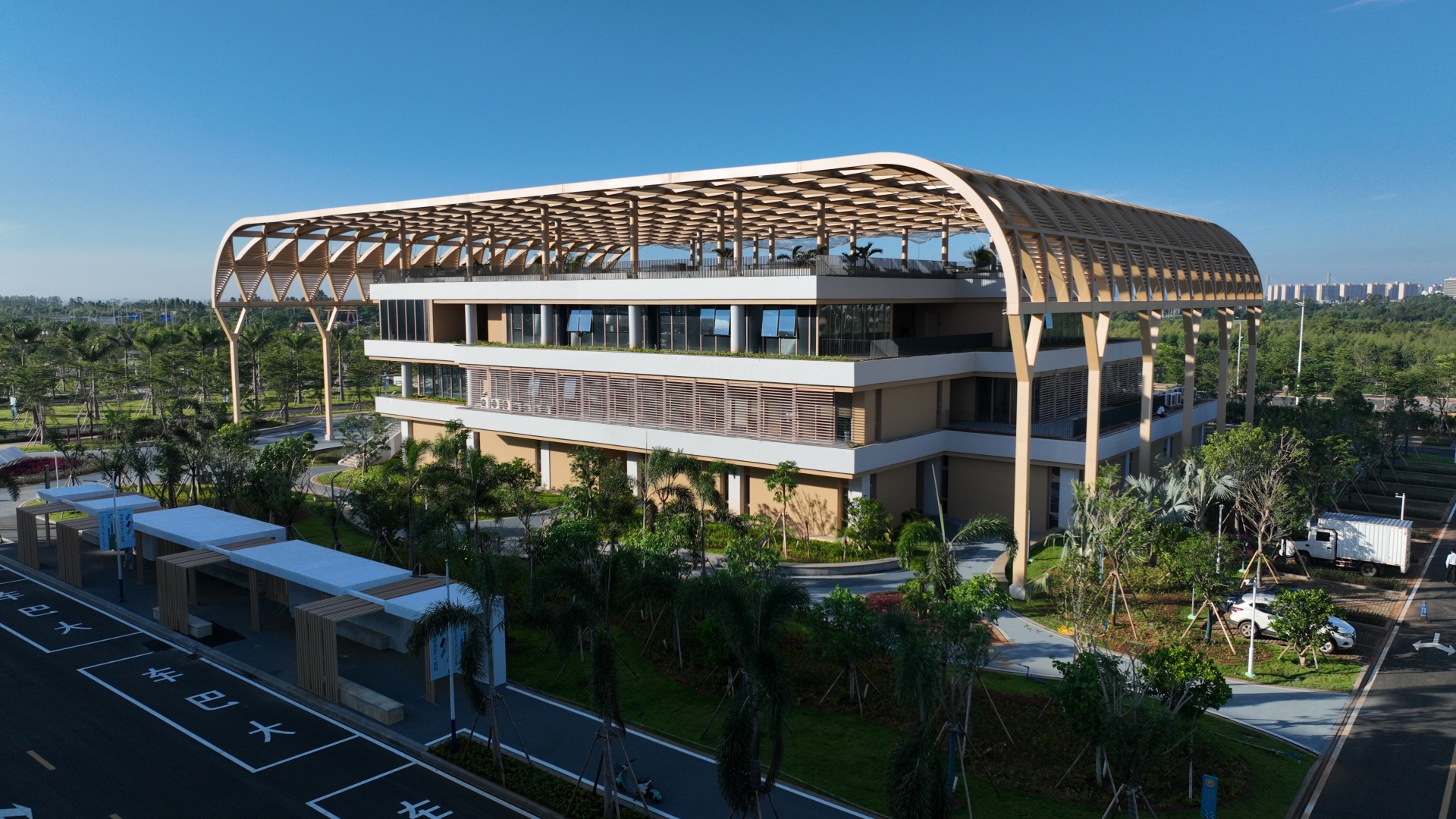
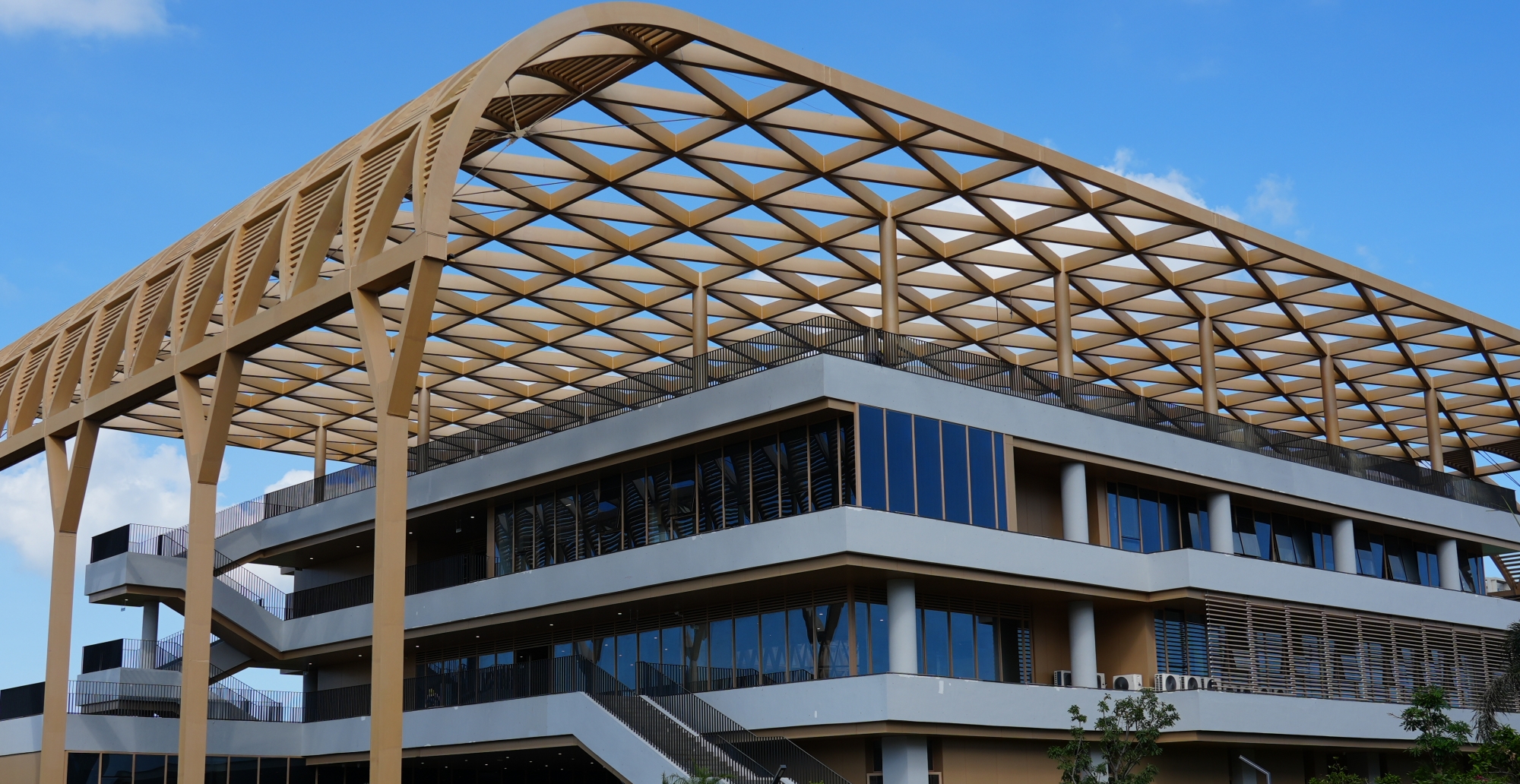
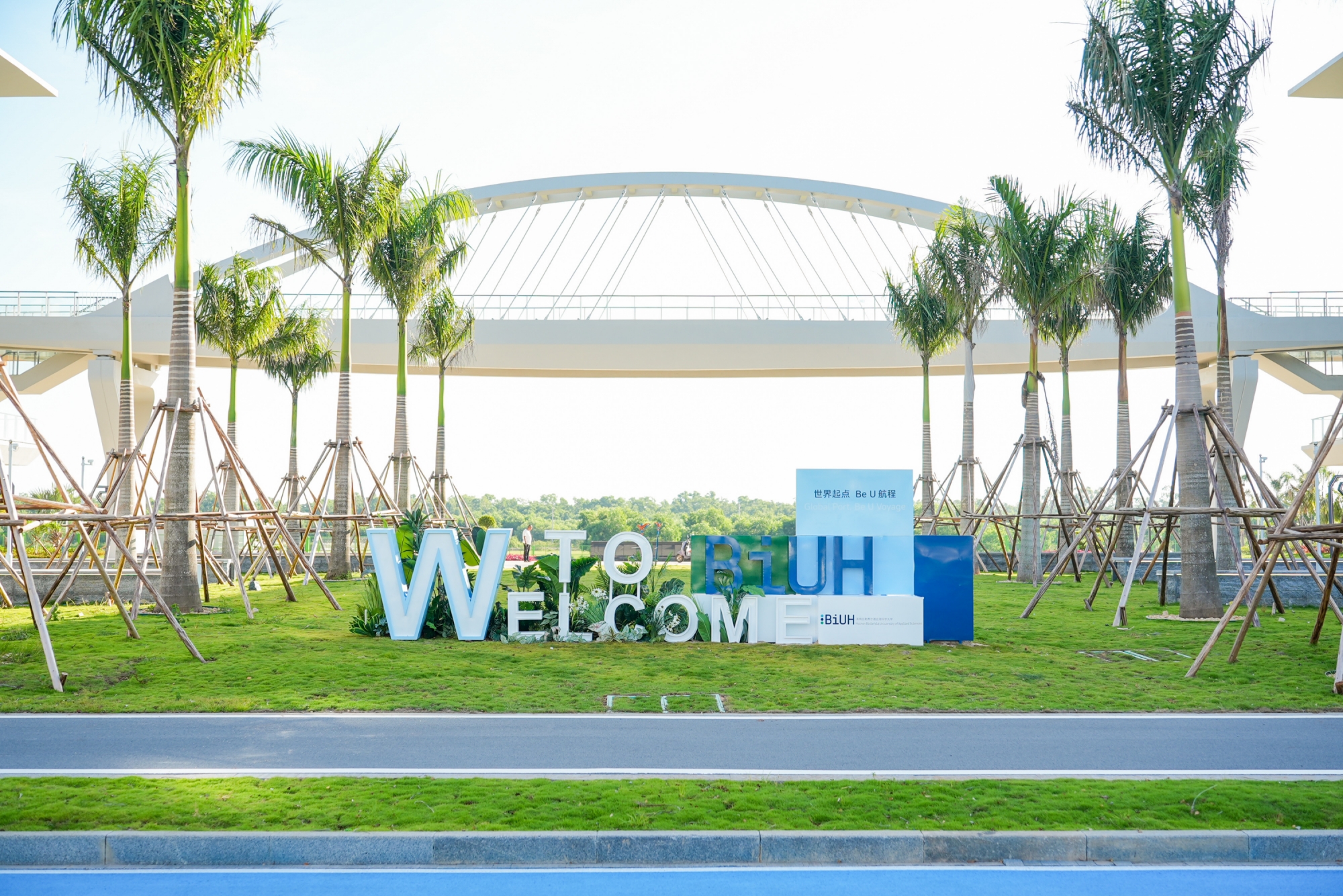
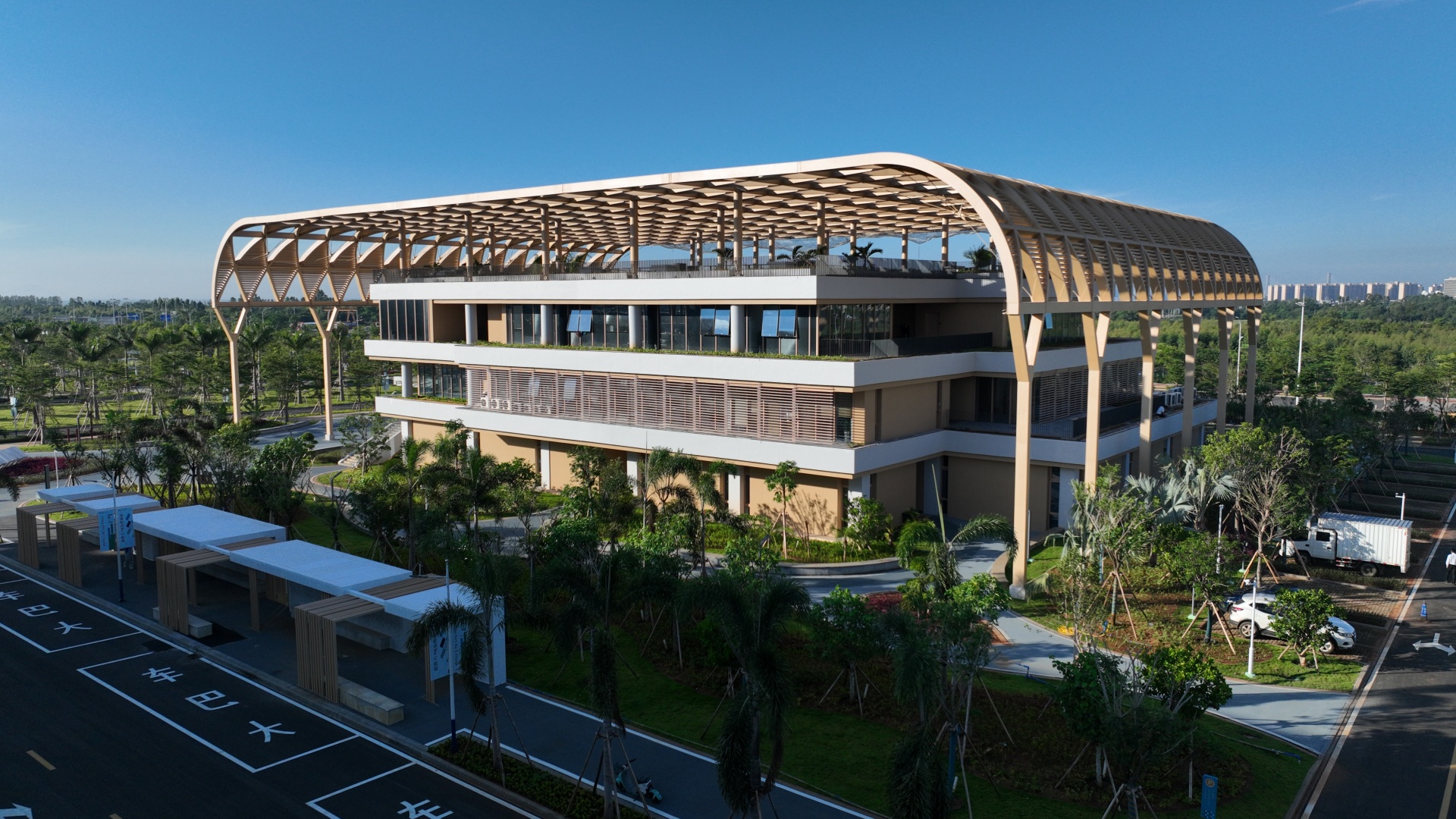
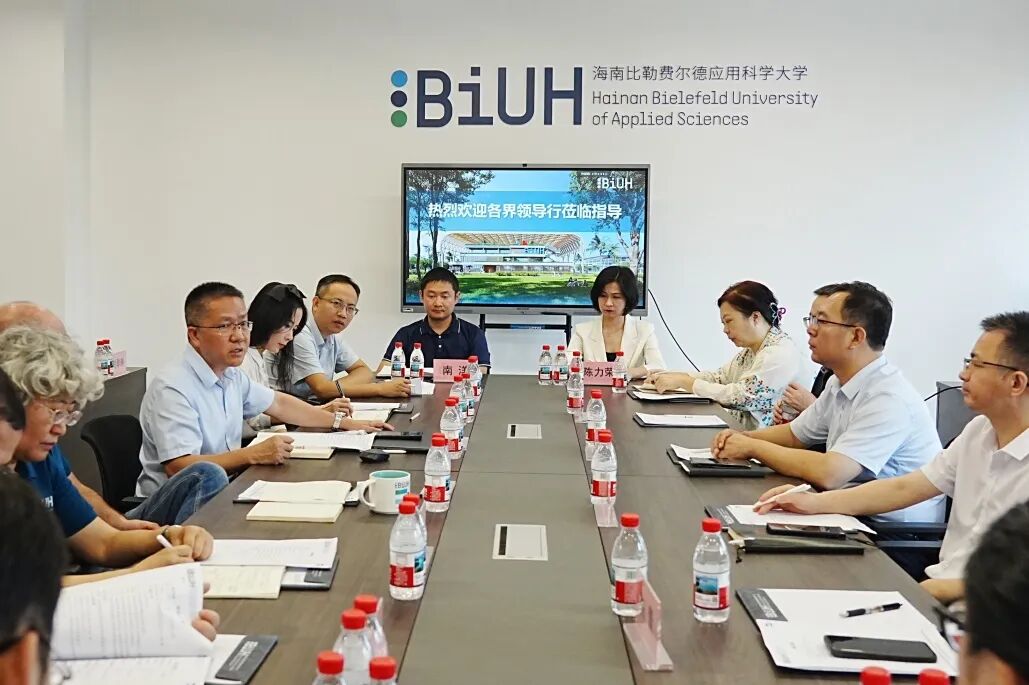
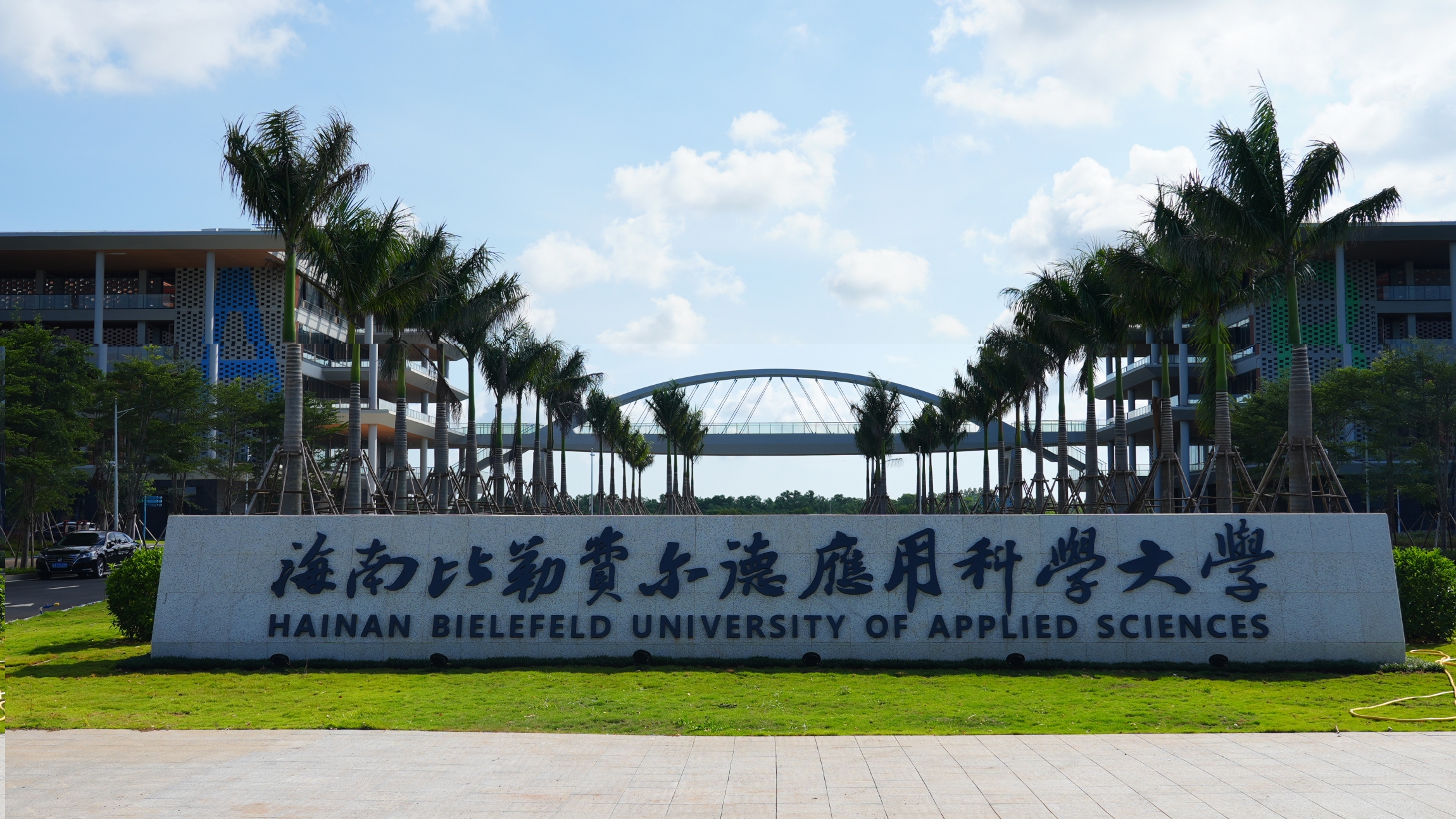
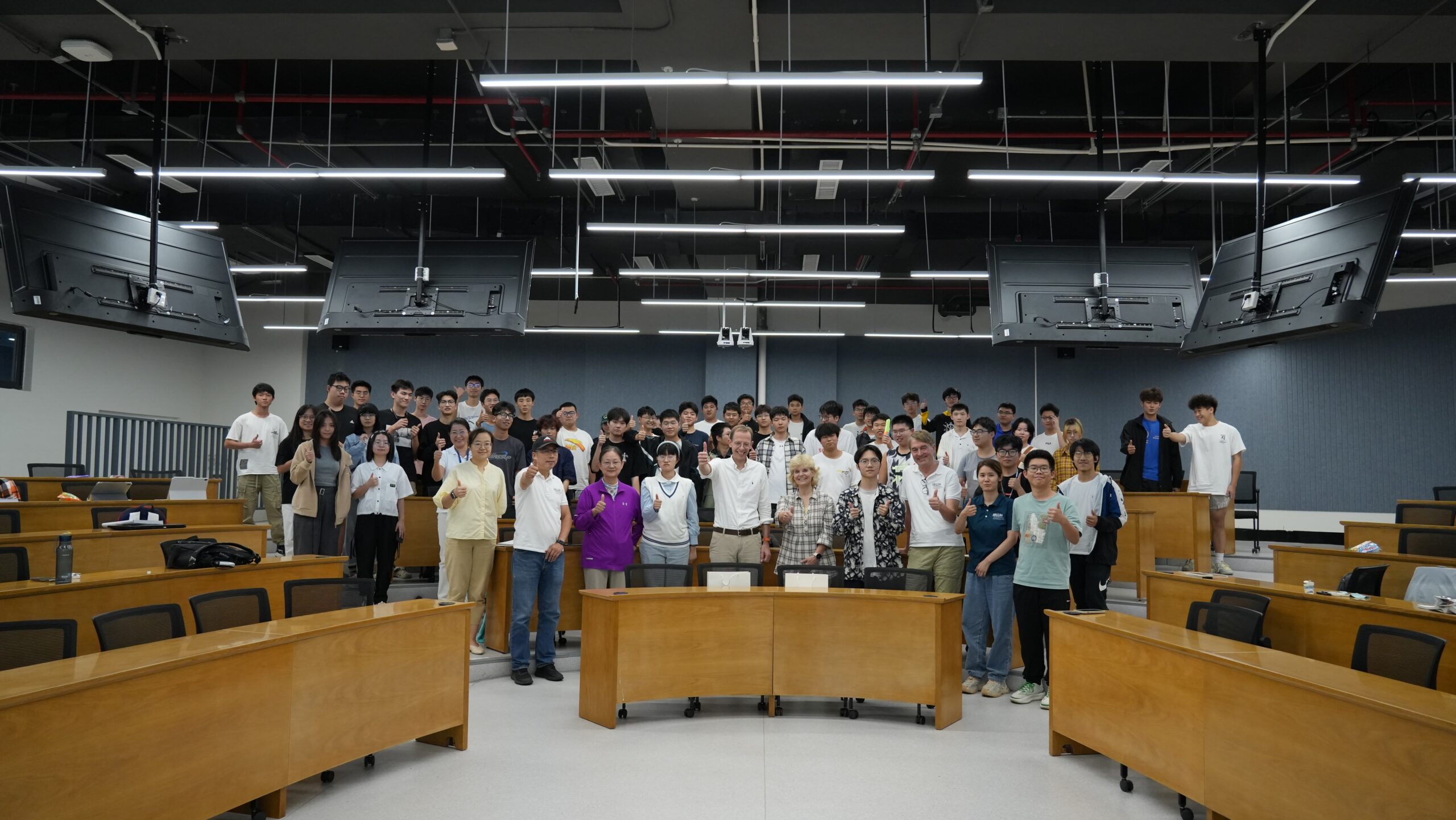
From July 27 to 29, the 12th Symposium on the Application of Mathematics in Enterprises was held in the Conference Hall of Hainan Bielefeld University of Applied Sciences. The symposium was jointly organized by Hainan Bielefeld University of Applied Sciences and the Chinese Society of Optimization, Overall Planning and Economic Mathematics. It was hosted by the Mathematics Modeling and Algorithms Branch of the Chinese Society of Optimization, Overall Planning and Economic Mathematics, and co-organized by the Virtual Teaching and Research Center for University Mathematics Curriculum Groups of the Ministry of Education, North China University of Science and Technology, Baidu, Sugon Decision, Bose Quantum, JD Logistics, Beitai Tianyuan, Saikr, and other organizations.

As a university with distinctive international characteristics and an application-oriented educational mission, Hainan Bielefeld University of Applied Sciences has consistently focused on industrial needs and regional development. The university actively promotes the integration of industry and education, the integration of science and education, and international cooperation.

The symposium provided a high-level platform for communication among experts and scholars, enterprise representatives, and outstanding student representatives in the fields of mathematical modeling, applied mathematics in enterprises, artificial intelligence, and intelligent manufacturing. It also highlighted the university’s active efforts in application-oriented talent development, interdisciplinary research cooperation, and industry-academia-research collaboration.

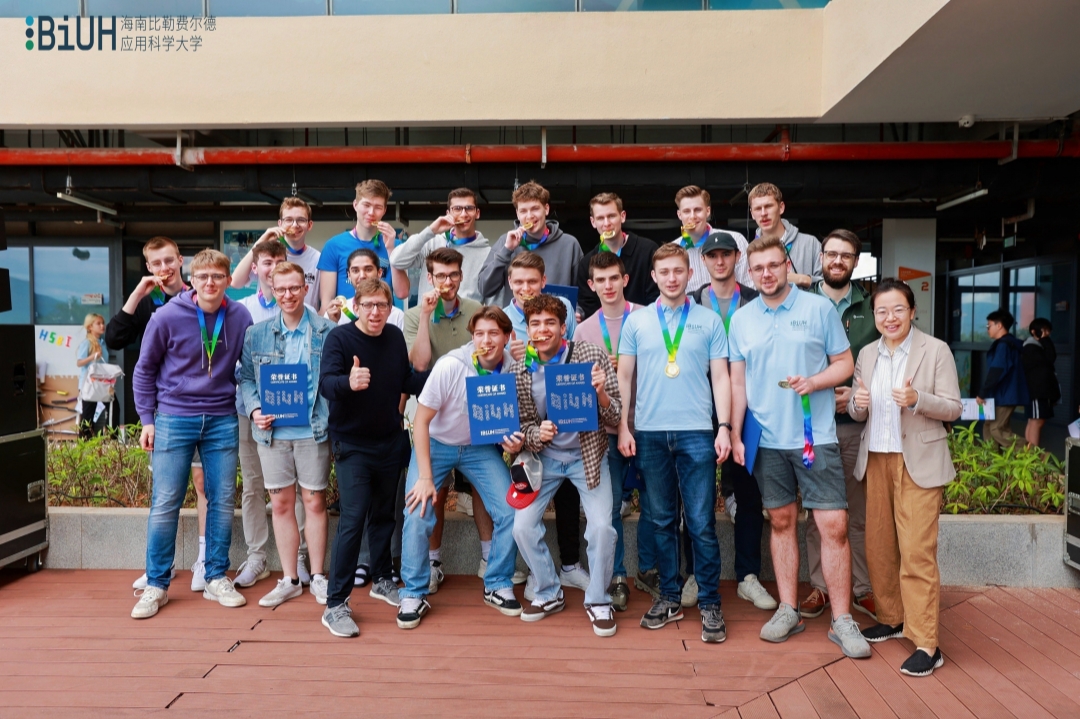
The symposium brought together experts and scholars from research institutes and universities across China, representatives of government departments and enterprises, as well as award-winning students. The participants delivered presentations and engaged in discussions on the application of mathematics in enterprises, covering such frontier topics as mathematical modeling, intelligent decision-making, scientific computing, the low-altitude economy, ecosystem modeling, autonomous driving, and artificial intelligence.

At the opening ceremony, Prof. Dr. Ingeborg Schramm-Wölk, President of Hainan Bielefeld University of Applied Sciences, delivered a speech. On behalf of the university, she warmly welcomed the leaders, experts, scholars, enterprise representatives, and students attending the symposium. She also introduced the university’s educational background, development mission, international characteristics, and approach to application-oriented talent development.

Prof. Dr. Schramm-Wölk stated that Hainan Bielefeld University of Applied Sciences places great importance on integrating mathematics and engineering technology with industrial practice. She expressed the hope that the symposium would further strengthen cooperation among universities, research institutions, and enterprises in China and abroad, and jointly promote the application and innovation of mathematical methods in real-world industrial settings.

Mr. GUAN Zhongcheng, Chairman of the Chinese Society of Optimization, Overall Planning and Economic Mathematics, introduced the development of the society and congratulated the organizers on the successful opening of the symposium at Hainan Bielefeld University of Applied Sciences. He noted that the Symposium on the Application of Mathematics in Enterprises serves as an important platform connecting mathematical theory, engineering practice, and industrial needs. He expressed the hope that all participants would deepen communication, build consensus, and promote the application of mathematical modeling and optimization methods to enterprise development.

Mr. GAO Suixiang, Chairman of the Mathematics Modeling and Algorithms Branch of the Chinese Society of Optimization, Overall Planning and Economic Mathematics, introduced the MathorCup Mathematical Contest in Modeling and shared suggestions concerning competition organization, talent development, and enterprise-based topics. He emphasized that mathematical modeling competitions are not only important for developing students’ comprehensive capabilities, but also serve as an effective means of promoting educational reform in universities and transforming practical enterprise problems into educational resources.

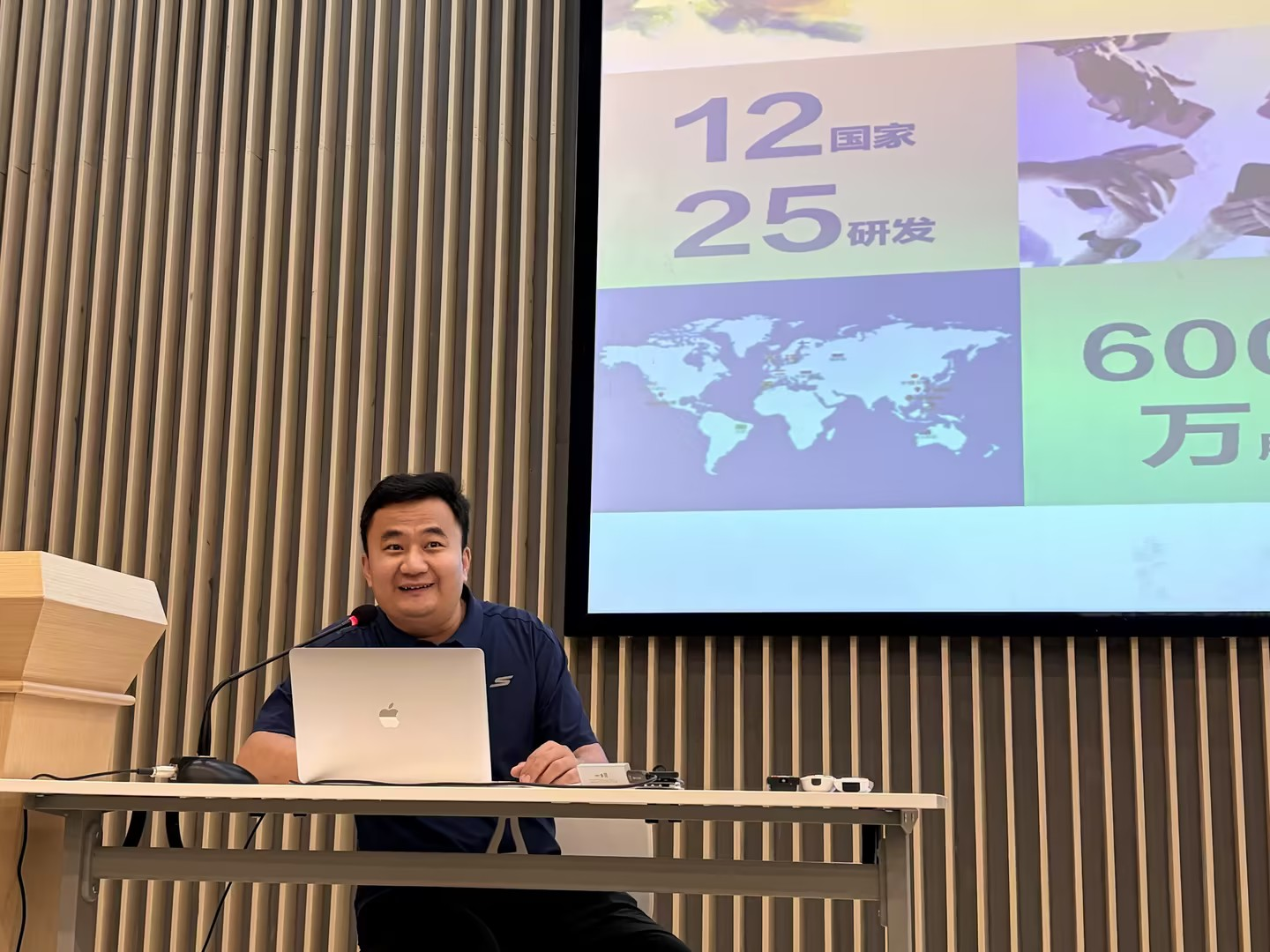
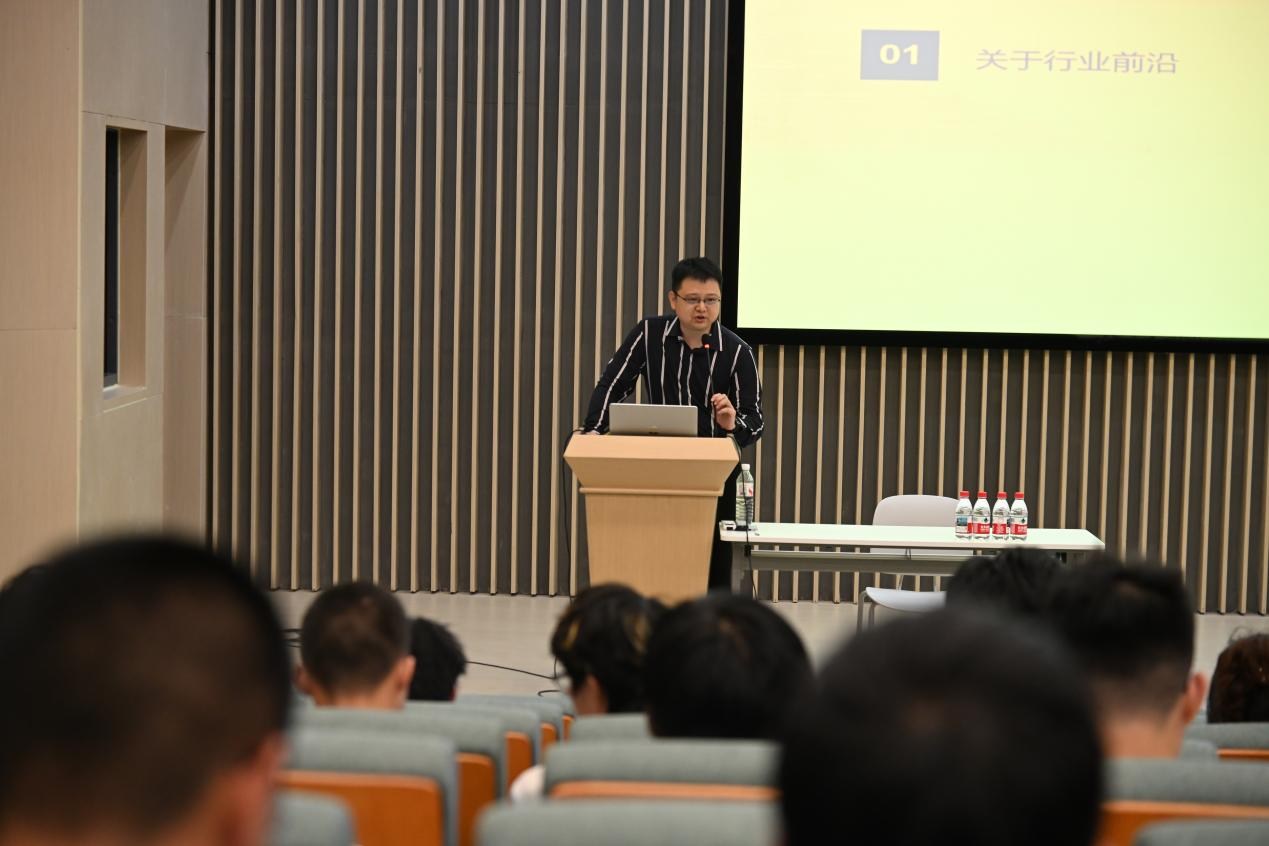
During the symposium, experts from universities, research institutions, and enterprises delivered presentations on the application of mathematics in enterprises. The presentations covered scientific computing, intelligent decision-making, the low-altitude economy, artificial intelligence-enabled mathematical modeling, ecosystem optimization modeling, and autonomous driving.

Prof. Dr. ZNEG Zhuoqi, Dean of the School of Engineering at Hainan Bielefeld University of Applied Sciences, delivered a presentation entitled “The Intelligent Evolution of Autonomous Driving: From Traditional Modular Architectures to End-to-End Systems.” Focusing on the technological development of intelligent autonomous driving, the presentation systematically analyzed the key characteristics, strengths, and limitations of traditional modular architectures and end-to-end architectures. It also examined the challenges faced by both approaches in terms of safety, explainability, data requirements, engineering implementation, and regulatory oversight.

The presentation demonstrated the academic strengths and development priorities of Hainan Bielefeld University of Applied Sciences in intelligent engineering, autonomous driving, artificial intelligence algorithms, and application-oriented research.

Dr. LI Di, Algorithm Expert at Beitai Zhenhuan (Chongqing) Technology Co., Ltd., delivered a presentation entitled “Scientific Computing Software Supporting the Application of Mathematics in Enterprises: Exploration and Practice in the Integration of Artificial Intelligence.” Based on the development and application of the domestic scientific computing and system simulation software Beitai Tianyuan and Beitai Zhenyuan, the presentation explored how domestic scientific computing software can support the application of mathematics in enterprises.

The presentation first reviewed the mathematical categories and modeling processes underlying enterprise problems. It then introduced the collaborative framework between the Tianyuan scientific computing platform and the Zhenyuan system simulation environment, together with application cases in industries such as intelligent vehicles and aerospace equipment. Dr. Li also shared recent explorations into the integration of artificial intelligence, including deep learning toolboxes, Physics-Informed Neural Networks (PINNs), and Retrieval-Augmented Generation (RAG)-based intelligent assistants.

Ms. YAO Bowen, Education Solutions Expert at Suncells Technology, delivered a presentation entitled “Applications of Intelligent Decision-Making Agents in the Integration of Industry and Education.” The presentation focused on practical approaches to applying intelligent decision-making agents in industry-education integration. It examined enterprise scenarios such as production planning, supply chain coordination, and operational optimization.

By introducing real-world business problems, optimization models, and agent technologies into classroom teaching, the presentation explored how enterprise applications can be transformed into teaching cases, practical training projects, and talent development resources, thereby promoting the deep integration of intelligent decision-making technologies and educational practice.

Prof. Dr. WU Jianjun from Dalian University of Technology delivered a presentation entitled “Optimization of Low-Altitude Operations Management Systems and Scenario Integration.” Based on the current development of China’s low-altitude economy, the presentation analyzed optimization problems in low-altitude operations management, as well as several typical application scenarios and their characteristics. Focusing on innovation through scenario integration, Professor Wu further examined key scientific issues from the perspective of future priority application scenarios, providing new insights into operations management and system optimization in the development of the low-altitude economy.

Prof. Dr. WANG Yikang from China Jiliang University delivered a presentation entitled “Methods and Strategies for AI-Enabled Mathematical Modeling Competitions.” The presentation provided a systematic analysis of the opportunities and challenges brought by artificial intelligence to mathematical modeling competitions.

Professor Wang pointed out that current AI tools have significantly lowered the entry barrier to mathematical modeling, while also creating challenges such as homogenization of papers and weakened logical reasoning. Focusing on three types of competition problems, namely data-oriented, optimization-oriented, and mechanism-oriented problems, the presentation outlined a complete methodological framework ranging from statistical description and machine learning to optimization and mechanism-based derivation. Professor Wang emphasized that mathematical modeling competitions should remain committed to their fundamental educational mission of cultivating talent and solving real-world problems.

Prof. Dr. ZHAO Tong from the University of Chinese Academy of Sciences delivered a presentation entitled “Steady-State Transitions in Ecosystems and the Construction of Optimization Models from the Perspective of Complex Systems Theory.” The presentation proposed a quantitative modeling framework for ecosystem steady states based on energy flows within food webs.

Specifically, the model uses the amount of energy transferred between species as the decision variable and formulates an optimization problem based on an energy-transfer resistance function. The objective function is convex and the feasible region is a convex set, ensuring the existence of a unique optimal solution. Furthermore, the first-order necessary conditions are equivalent to the Nash equilibrium conditions.

This modeling strategy transforms the abstract “potential surface” in the traditional ball-in-cup illustration into a computable object driven by data, providing a quantitative tool with mechanistic interpretability for the study of steady-state transitions. Validation using data from multiple real-world ecosystems demonstrated the applicability and effectiveness of the model across different ecosystem types and spatial scales.

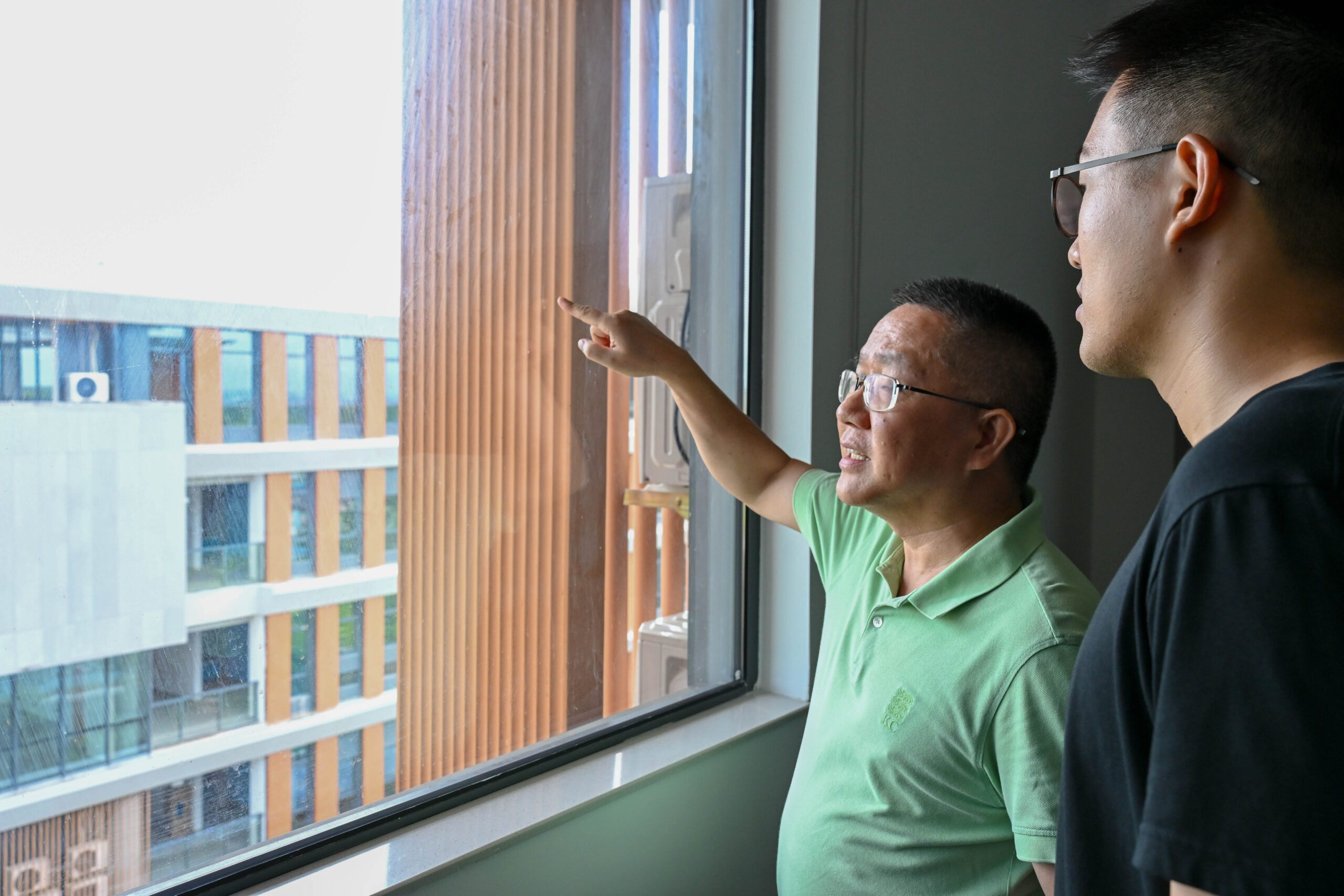
During the symposium, the participating guests also visited the Unmanned Aerial Vehicle and Embodied Intelligence Robotics Laboratories at Hainan Bielefeld University of Applied Sciences. The laboratory representatives introduced the university’s development and research progress in unmanned systems, embodied intelligent robots, intelligent perception, robotic control, and artificial intelligence algorithms.

Through the visit, the guests gained a deeper understanding of Hainan Bielefeld University of Applied Sciences’ achievements in the application of engineering technologies, the development of intelligent equipment, and the construction of industry-education integration platforms.

The university will continue to leverage its international educational strengths and application-oriented research platforms to promote the integration of mathematics, artificial intelligence, robotics, autonomous driving, and other interdisciplinary fields with industrial needs. It will also contribute to the development of the Hainan Free Trade Port and regional industrial upgrading by cultivating more highly skilled application-oriented professionals.

The symposium concluded successfully following a series of lively and in-depth academic exchanges. The successful hosting of the 12th Symposium on the Application of Mathematics in Enterprises at Hainan Bielefeld University of Applied Sciences not only provided an important platform for discussing how mathematical methods can serve enterprise practice, but also further strengthened cooperation among universities, research institutions, and enterprises.

In the future, Hainan Bielefeld University of Applied Sciences will continue to follow its development mission of application-oriented education, internationalization, and industry-education integration. The university will actively build high-level platforms for academic exchange and industrial cooperation, and promote the innovative application of mathematical modeling, artificial intelligence, intelligent manufacturing, and engineering technologies in real-world industrial settings.

We would like to express our sincere gratitude to all the leaders, experts, enterprise representatives, faculty members, students, and staff who participated in and supported this symposium. We look forward to meeting again at the next Symposium on the Application of Mathematics in Enterprises.