
I am CHEN Zhouxuyang, a Class of 2024 Digital Technology major at Hainan Bielefeld University of Applied Sciences (BiUH). This year, thanks to the distinctive “work-integrated” talent cultivation model of our university, I was fortunate to secure a valuable opportunity—an internship in the marketing department of Weidmüller Interface (Shanghai) Co., Ltd., a global leader in electrical connection technology. This experience not only gave me a tangible understanding of “integrating knowledge with action” but also profoundly revealed to me the unique advantages brought by university-enterprise collaboration and the Sino-German integrated educational model.
From its inception, BiUH has carried the DNA of the German “University of Applied Sciences” (FH) model, emphasizing the deep integration of theory and practice. The university’s talent cultivation plan does not simply place internships at the end of the academic journey; instead, it deeply embeds “practice” as a core element throughout the entire learning cycle. From day one at the Weidmüller marketing department, I was not merely a student observer.
Under the careful guidance of my corporate mentor, I quickly engaged in practical tasks such as market analysis, competitor research, social media content planning, and localization. My specialized knowledge in Digital Technology transformed here into the foundation for understanding product technical highlights and data quantification; concepts of project management and cross-cultural communication encountered in class took root in real teamwork. I realized that what enterprises need is not only individuals who grasp theoretical knowledge but, more importantly, those who can rapidly convert that knowledge into the ability to solve real-world problems. The “work-integrated” model is precisely the crucial design that builds this bridge of transformation.
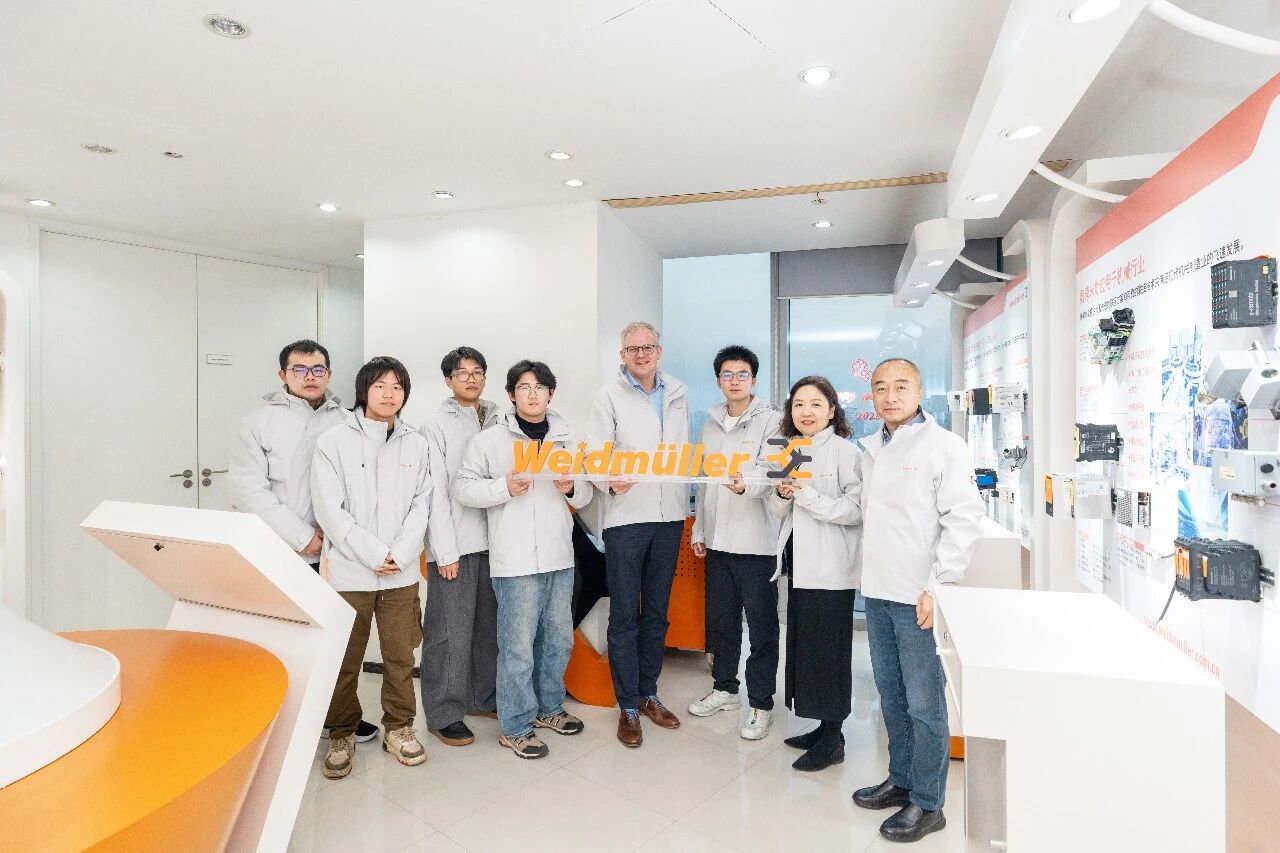
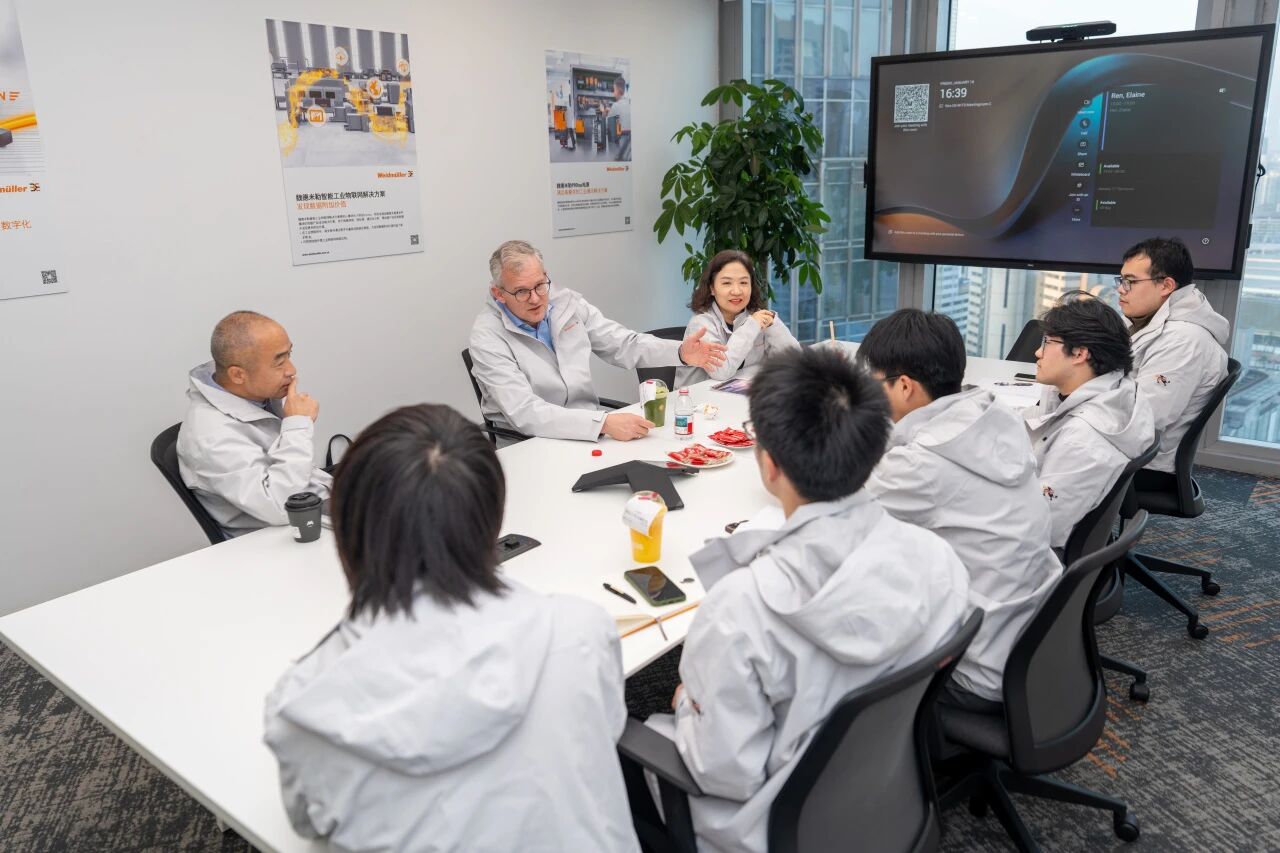
The most exciting moment during the internship was undoubtedly the face-to-face exchange last Friday with Dr. Sebastian Durst, the Global CEO of Weidmüller Group. This meeting was not a mere formality but a profound dialogue centered on “future talents” and “sustainable development.”
The core perspective shared by Dr. Sebastian Durst resonated strongly with my own experience as a “work-integrated” student. He particularly emphasized that Weidmüller values “the ability to learn quickly, problem-solving skills, and an open mindset towards new technologies,” not just existing knowledge. This precisely confirms the forward-looking nature of our university’s cultivation model—we are being trained to adapt to change, learn proactively, and define and solve problems in real-world scenarios.
When I asked him about his understanding of the role of the cooperation between Bielefeld University of Applied Sciences (HSBI) and Weidmüller in bridging theory and practice, Dr. Durst provided a detailed explanation. He first affirmed the success of the German dual vocational education model and further pointed out: “The Sino-German cooperation with Hainan Bielefeld University of Applied Sciences elevates this principle to a new level; it combines dual education with international experience.” He explained that outstanding students can not only acquire theoretical knowledge through studying both in Hainan and Bielefeld but also accumulate work experience through internships in both China and Germany (e.g., at Weidmüller China and Weidmüller Germany, respectively).
He believes such experiences ultimately shape the talent profile sought by many enterprises: possessing both the knowledge base of a university and initial practical experience in an international environment. Dr. Durst also shared his personal experience: “Looking back at my own student days, this is exactly what I sought, but at the time, there was no structured program to support it. Beyond my studies in Germany and Scotland, I completed multiple internships both in Germany and abroad. The latter, especially, allowed me to see the practical use of what I had learned and helped me grow both professionally and personally.”
This profound exposition allowed me to step beyond the limited perspective of an intern’s role. It helped me understand that my participation is not simply in a routine internship but in a structured talent cultivation program with an international vision. This conversation convinced me that at Weidmüller, our practice is placed within a grander narrative; our growth is closely connected to the company’s future.
Every day at Weidmüller, I experienced the “multiplier effect” of university-enterprise collaboration in talent cultivation. As Dr. Durst explained, this cooperation surpasses traditional models. The enterprise provides a real frontline battleground, cutting-edge technology application scenarios, and a rigorous business environment; the university laid the groundwork for me with a systematic theoretical knowledge framework, methodology, and the foundation for cross-cultural adaptation. The seamless connection between the two makes the learning objective exceptionally clear: I am not studying for exams but to create value.
The professionalism, precision, and international standard displayed in Weidmüller’s marketing communications elevated my understanding of “brand” and “market” from textbook concepts to tangible, participative practice. This illustrates that the “work-integrated” model is not just a one-way dispatch of students to enterprises; it also encourages students to actively integrate, innovate, and provide feedback in real-world settings, creating a process of mutual nourishment.
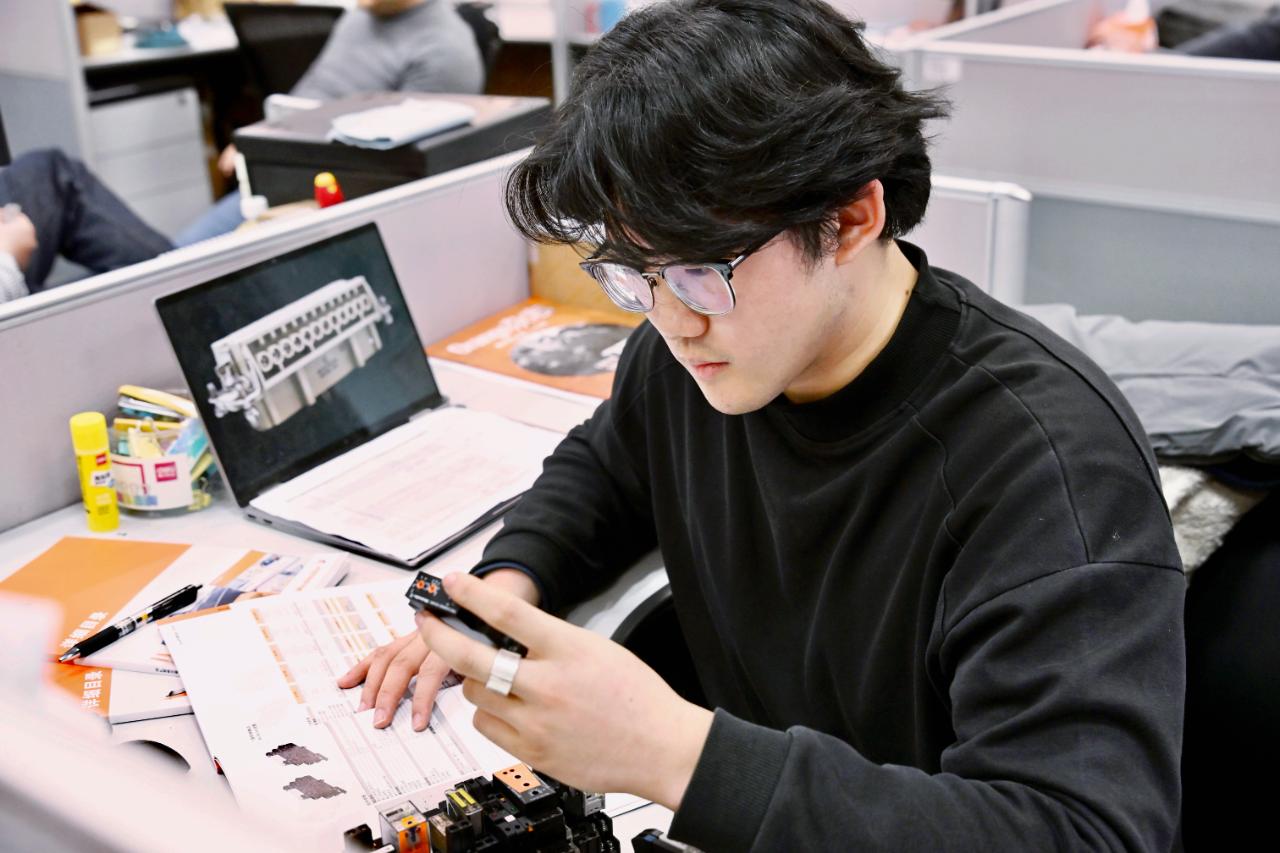
Looking back on the more than half of my internship in the Weidmüller marketing department, I genuinely feel how Hainan BiUH’s “work-integrated” model aids my future growth—it allows me, early in my academic career, to stand on the shoulders of an industry giant like Weidmüller to look out at the world, to root and sprout classroom learning in the real soil of business and technology. Just as Dr. Sebastian Durst emphasized in our exchange, future talents need the “connecting” ability to bridge technology and market, global vision and local action. This internship has made me truly feel that I am growing in precisely this direction.
This experience is a significant and enriching chapter in my university life. It has helped me clarify my career path and given me a deeper understanding of “applying learning to practice, and using practice to promote learning.” I believe that under such a deeply integrated university-enterprise resource cultivation model, more students can be helped to master technology while also understanding the market, eventually becoming outstanding talents who possess both an international perspective and local practical capabilities.