
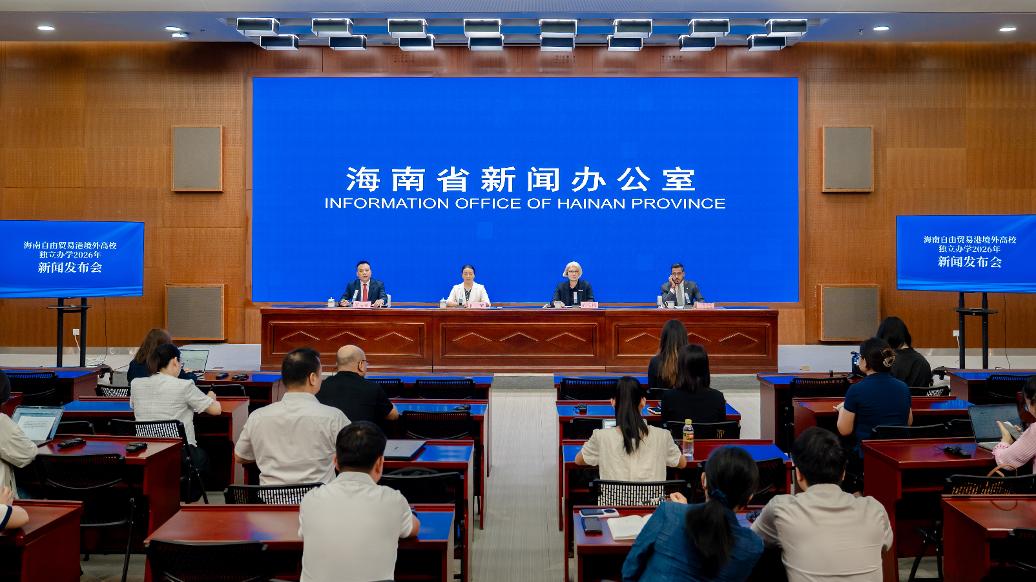
On June 26, the 2026 press conference on the independent operation of foreign higher education institutions in the Hainan Free Trade Port was held in Haikou. Prof. Dr. Ingeborg Schramm-Wölk, President of Hainan Bielefeld University of Applied Sciences (BiUH), gave a detailed introduction to the university’s educational features, program offerings, and the 2026 enrollment plan, and responded to questions from the media.
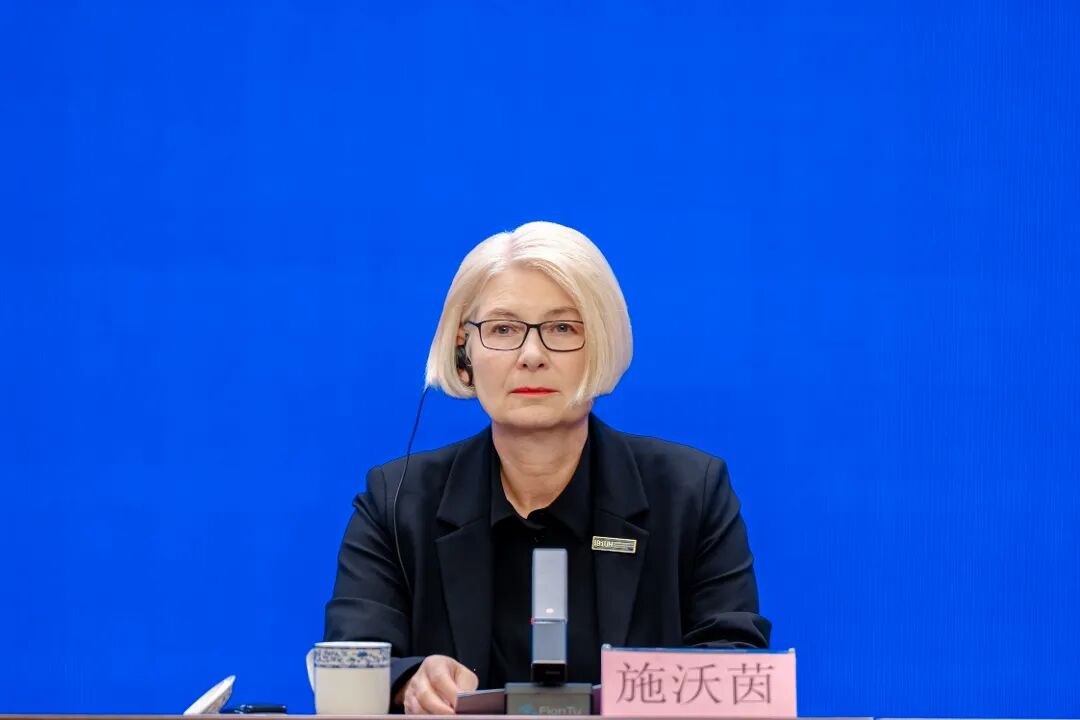
President Prof. Dr. Ingeborg Schramm Wölk introduced the BiUH’s operations and 2026 student recruitment:
Distinguished moderator, members of the media, ladies and gentlemen, good morning.
First, I would like to express my deepest gratitude to the Hainan Provincial Party Committee, the Provincial Government, the Provincial Education Department, as well as the Danzhou Municipal Party Committee and Municipal Government. Your strong and consistent support has laid a solid foundation for Hainan Bielefeld University of Applied Sciences (BiUH). As the first overseas institution approved by China’s Ministry of Education to operate independently in China, our university was founded on a profound trust that transcends geographical and cultural boundaries.
Last December, the Hainan Free Trade Port officially commenced its island-wide special customs operations. The Free Trade Port’s bold institutional innovations, seamless cross-border data flows, and open talent policies have made it an ideal testing ground — the perfect place for pioneers like us to explore new models of international higher education. Today, technological development is advancing at an unprecedented pace. One of the major global challenges is how to achieve a seamless convergence between technological innovation and industrial innovation. We need to connect the entire innovation chain — from basic research and applied development all the way through to final implementation.
In Germany, our Higher Education Act enshrines what is known as the “third mission” of technology transfer, which stands alongside teaching and research as one of the three core pillars of our universities. Bielefeld University of Applied Sciences (HSBI) has 50 years of deep experience in this domain. In Germany, we maintain close partnerships with more than 350 companies, including many globally recognized “hidden champions.” What we are doing today is not simply establishing a university in Hainan. We are bringing to China a well-established network that integrates business, science, and research — one that is proven to shorten the innovation cycle.
The cornerstone of our educational philosophy is “work-integrated” education. At BiUH, from their second year of study onwards, students are no longer confined to the classroom. They enter industry partners or engage in project-based placements, taking on genuine research, development, and optimization tasks. They are required to tackle real-world engineering and business challenges on the front line. We firmly believe that in the face of today’s complex global challenges, true competence can only be forged through the process of solving real problems.
Thanks to the industrial landscape of the Free Trade Port, our campus is on a fast track of growth. We currently have nearly 600 students and 120 Chinese and international faculty and staff. Our proportion of international faculty and staff has already reached 26%, and we plan to raise this to 50% in the future. In 2026, our university will enroll 800 new students nationwide. Building on our existing programs in Computer Science, Digital Technologies, Industrial Engineering, and Logistics Engineering, we are launching three new programs this year: Electrical Engineering, Software Engineering, and Business Administration — the latter open to students from humanities backgrounds for the first time. These seven programs directly serve the key industries of the Hainan Free Trade Port in high-end manufacturing, the digital economy, and modern logistics.
We believe that talented students should not be held back by financial constraints. To this end, we have developed an attractive scholarship program. This includes the President’s Special Scholarship offering full tuition waivers, as well as First-Class and Second-Class Freshman Scholarships offering 50% and 25% tuition reductions respectively.
Education has always been an act of faith in the future. Every university ever founded rests on the belief that what we do today will have a profound impact on generations yet unborn. Today, on this campus in Danzhou, we are all living out that faith together — students and parents, teachers and administrators, and our German, Chinese, and international partners from around the world, all working side by side.
I am convinced that BiUH will grow into a place where ideas converge, innovation flourishes, and cooperation creates shared value. But I am not only confident — I am excited. Because the people in this room and working alongside us are precisely the ones who will make it all a reality. We warmly welcome young people who think boldly and who are eager to solve the challenges of tomorrow within international, interdisciplinary teams.
Thank you.
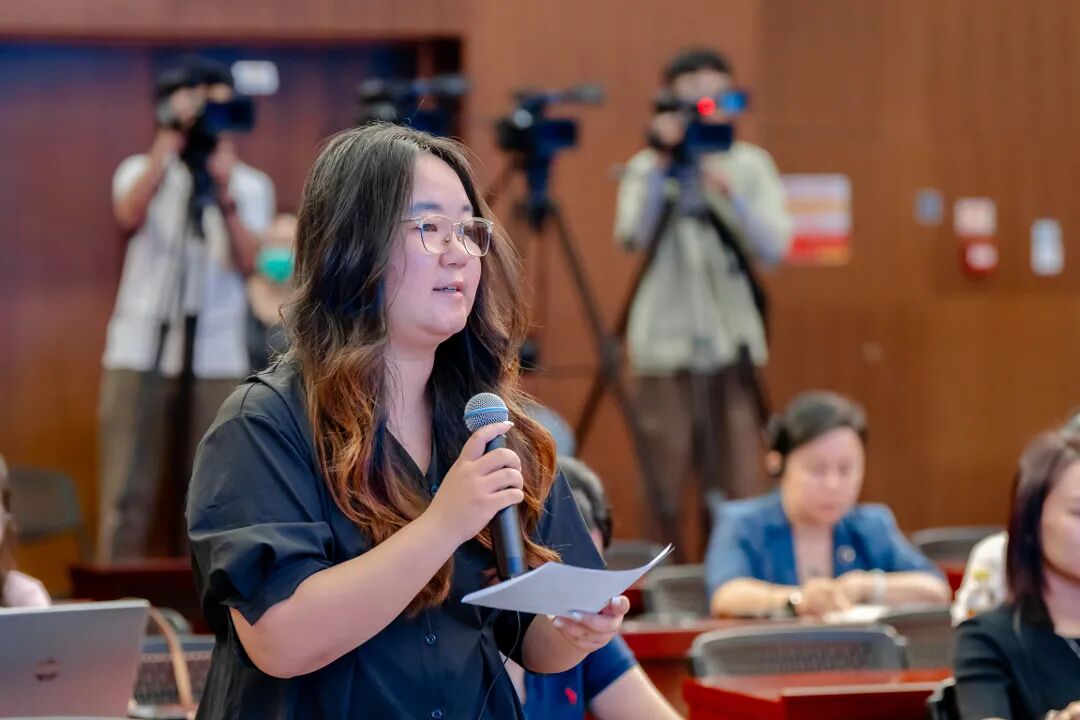
Reporter from China Daily:
My question is for Prof. Dr. Ingeborg Schramm-Wölk, President of Hainan Bielefeld University of Applied Sciences. Could you please explain how the German work-integrated education model is being implemented on the BiUH campus?
Prof. Dr. Schramm-Wölk:
Thank you for this question. Hainan Bielefeld University of Applied Sciences is a university established and operated independently by Bielefeld University of Applied Sciences of Germany in China, in accordance with Chinese law. The curriculum system, teaching standards, and quality management all follow German standards, authentically and in their entirety. This means that a student studying in Hainan receives an applied sciences university education of exactly the same standard as they would in Germany.
We have broken away from the traditional model in which classroom learning and industry practice are kept separate. Partner companies are deeply involved in talent development from the outset: they collaborate with us to design curricula and develop training content, converting real company projects into teaching cases; engineers from partner companies come into the classroom to deliver courses, keeping instruction closely aligned with industry; and practical training runs throughout the entire university experience, with students entering partner companies in stages from their second year of study onwards to put the principle of “learning by doing and doing by learning” into practice.
This model enables graduates to adapt quickly to their roles upon entering the workforce, truly integrating student recruitment, talent cultivation, and employment into a seamless continuum. We have already signed cooperation agreements with well-known companies including Weidmüller, ZF Group, TRUMPF Group, China Unicom, and China Mobile, and some second-year students have already entered these companies through this model to participate in actual projects. In addition, the campus is equipped with fully functional practice workshops that closely replicate real industry environments, giving students the option to complete their practical training on campus.
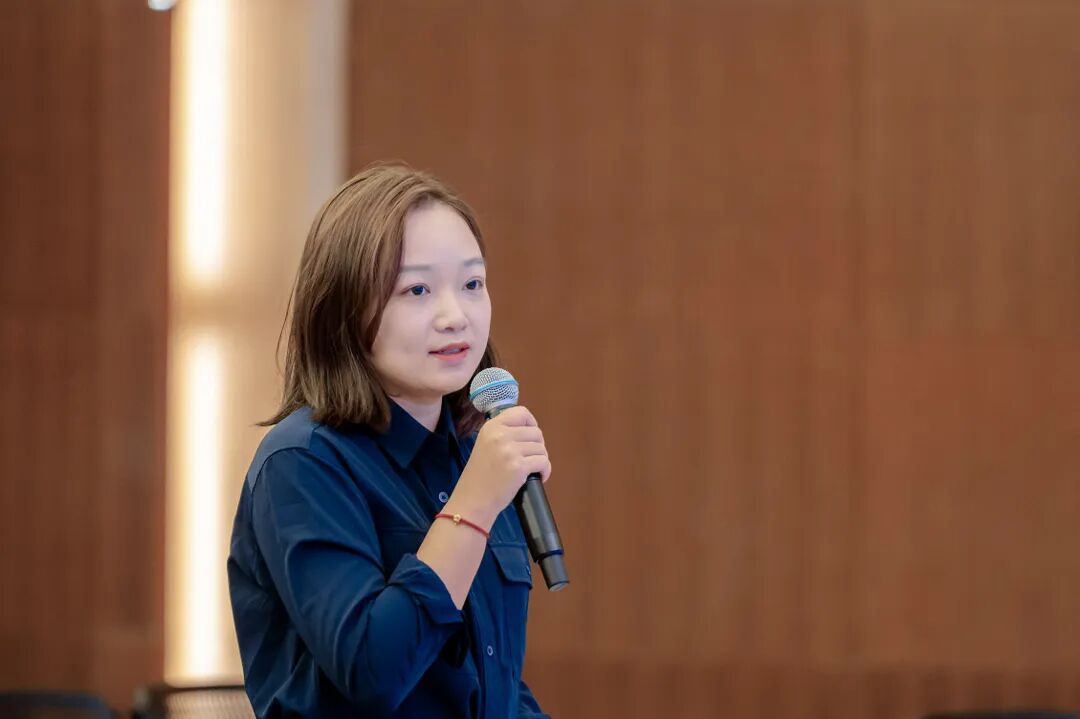
Reporter from Hainan Daily:
My question is also for Prof. Dr. Ingeborg Schramm-Wölk. What specific plans does Hainan Bielefeld University of Applied Sciences have for program development, school-enterprise cooperation, and international exchange?
Prof. Dr. Schramm-Wölk:
Thank you for this question. Our students live in a naturally multilingual environment: instruction is conducted in English, German language courses are available on campus, and students are surrounded by international faculty and peers — an immensely valuable form of international immersion. But German also serves a more tangible purpose: it is the key to the dual-degree pathway and an important bridge connecting German education with German industry. Students who pass all required course examinations and achieve a German language proficiency level of B2 or above during their studies are eligible to study at Bielefeld University of Applied Sciences in Germany for one year. After completing their studies in Germany, passing the C1 German language examination, and completing the relevant course requirements, students can simultaneously obtain a Chinese bachelor’s degree and a degree certificate from Bielefeld University of Applied Sciences in Germany. Multilingual proficiency also broadens students’ development pathways — students can equally apply to pursue further studies in English-speaking countries such as the United Kingdom and the United States, offering a diverse range of options for further education.
In the near term, building on our newly added programs in Mechanical Engineering, Electrical Engineering, Software Engineering, and Business Administration, we will further expand school-enterprise cooperation in the areas of intelligent manufacturing and modern services, jointly establishing practical training bases and research and development platforms with more German companies and leading enterprises in the Free Trade Port. In the medium to long term, we will continue to refine our academic disciplines, and steadily expand our student intake and campus capacity.
We have now officially obtained the qualification to recruit international students. Going forward, we will leverage the mature global recruitment network of our parent institution HSBI, while also developing dedicated international outreach initiatives targeting regions such as Europe and Southeast Asia. We hope to attract outstanding students from around the world, continuously enhance the international atmosphere on campus, and develop Hainan Bielefeld University of Applied Sciences into an international education window for the Hainan Free Trade Port facing the world — a hub for Sino-German industrial cooperation and educational collaboration — and a sustained demonstration of the Free Trade Port’s commitment to educational openness.
Thank you.