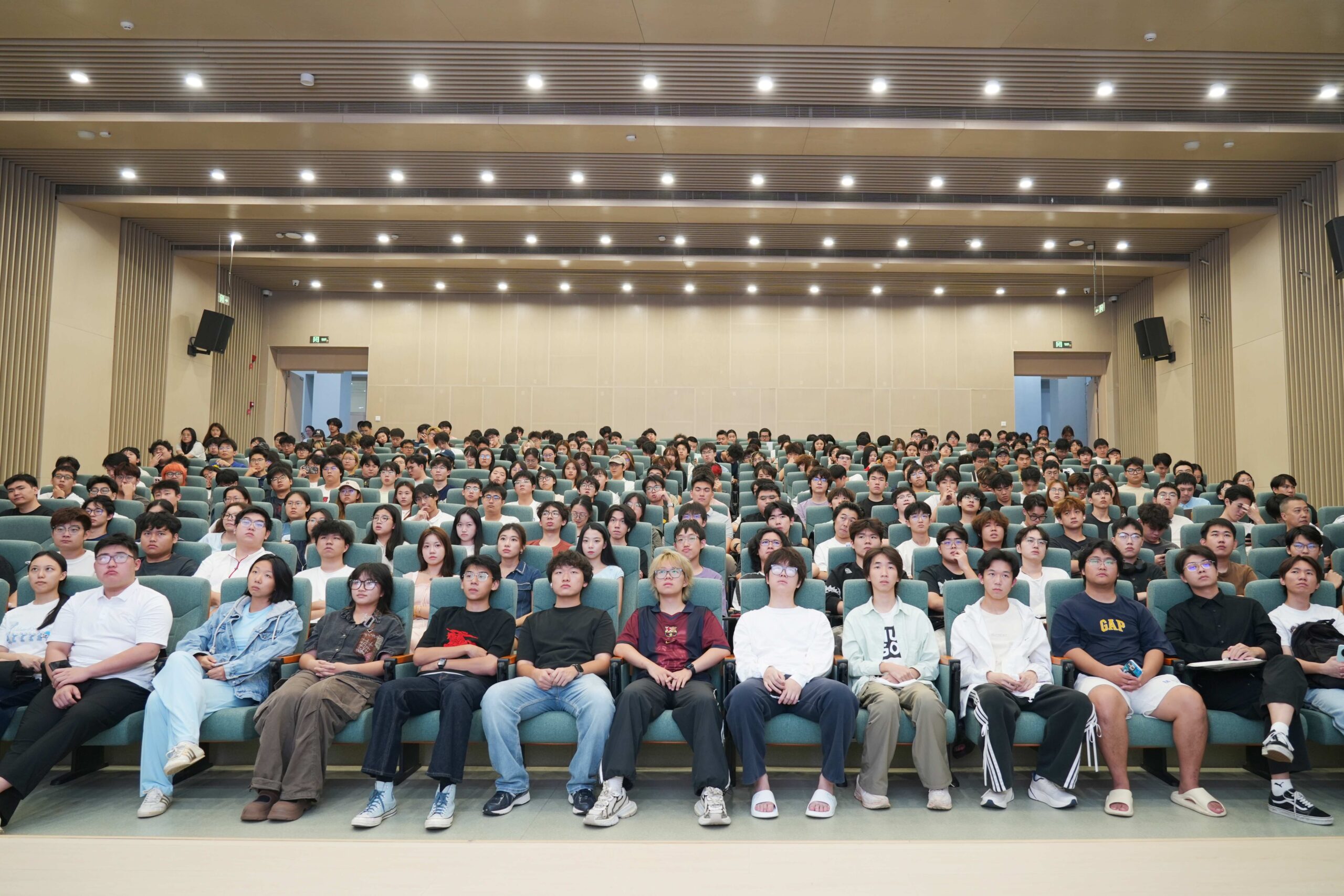
On 2–3 November, Lecture Hall A108 in Teaching Building A came alive for two evenings in a row, as BiUH held the company sessions and internship position launch of its 3rd Industry–Education Integration Week. Over two days, 13 leading companies took the stage one after another, releasing more than 400 internship positions for students of the 2026 winter semester — the largest number of positions in the event’s history, and a showcase of the university’s work-integrated education model.
Two Evenings, 13 Companies
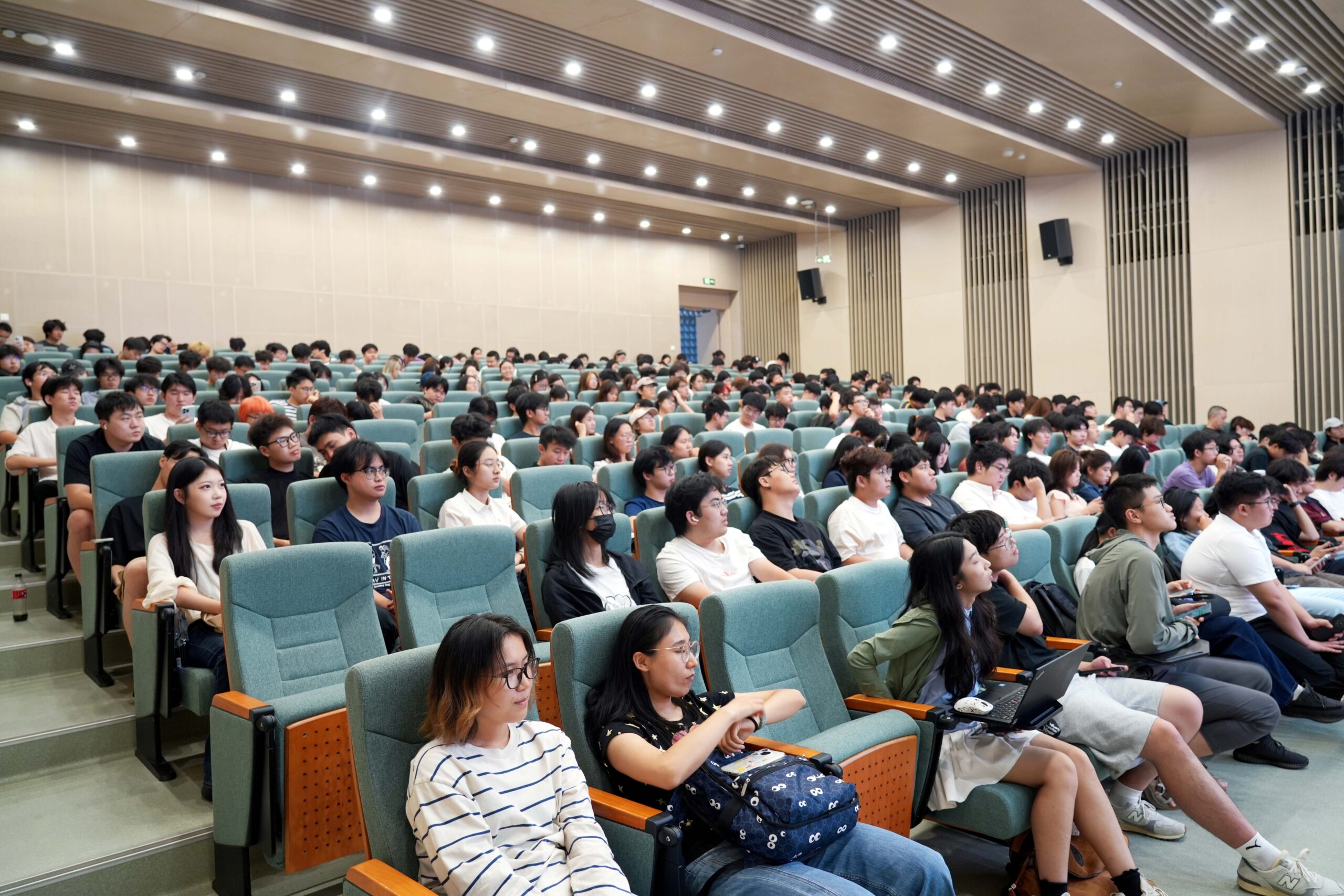
Behind that list of 400+ positions lies a demanding, tightly scheduled and highly coordinated team effort.
As the first university in China independently operated by a foreign institution, BiUH has stayed true to its work-integrated education model and actively positioned itself within the new landscape of the Hainan Free Trade Port’s island-wide independent customs operation. Building on the experience of the first two editions, this year’s programme expanded the supply of positions, diversified the mix of companies and strengthened on-site engagement — harnessing industry–education integration to develop students’ global competence.
The 13 companies are based in Beijing, Shanghai, Shenzhen, Hainan and beyond. Fitting all their presentations into just two evenings, with on-site and online sessions running in parallel, placed high demands on company coordination, platform support and student organisation. Thanks to the concerted support of departments across the university, both days ran smoothly and in good order.
It is worth noting that several companies were represented on stage by senior executives and heads of human resources. This is a strong vote of confidence in the quality of BiUH’s education — and a reflection of the university’s determination and capability to deepen industry–education integration and expand access to high-quality positions.
From the Lab to the Market: Positions for Every Direction
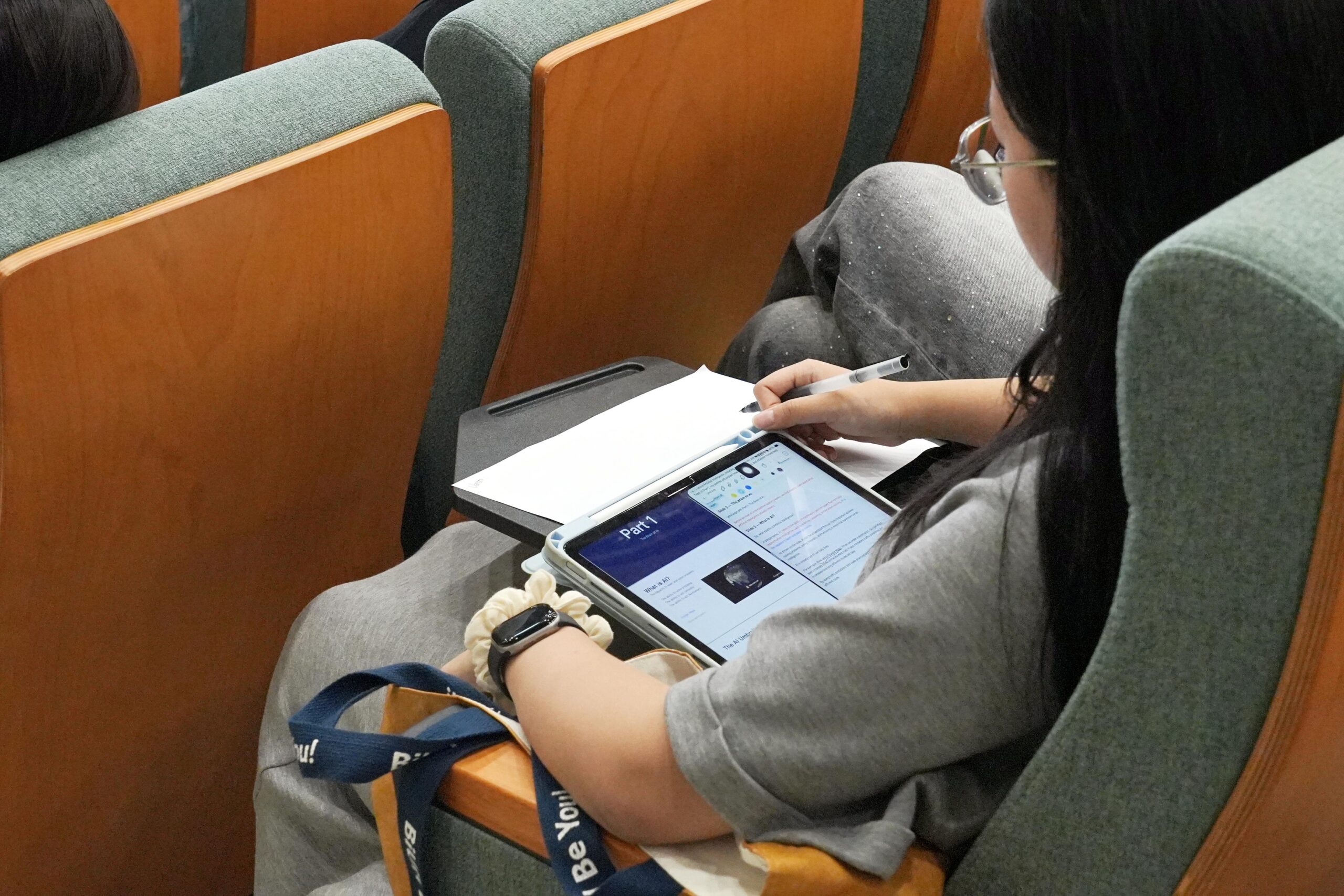
The positions on offer spanned a wide range of disciplines — computer science and software, electronics and electrical engineering, mechanical and intelligent manufacturing, economics, management and business, food science and new energy, as well as culture and the creative industries — and extended across job families including R&D and technology, intelligent manufacturing, supply chain and logistics, generative AI and digital content, finance and tax consulting, marketing and operations, HR and general functions, and creative planning.
Whether you write code, draw technical drawings, keep the books or create content, there is a place on this list that matches your field of study.
German firms, Fortune Global 500 and innovative forces of the Free Trade Port gather on the same stage
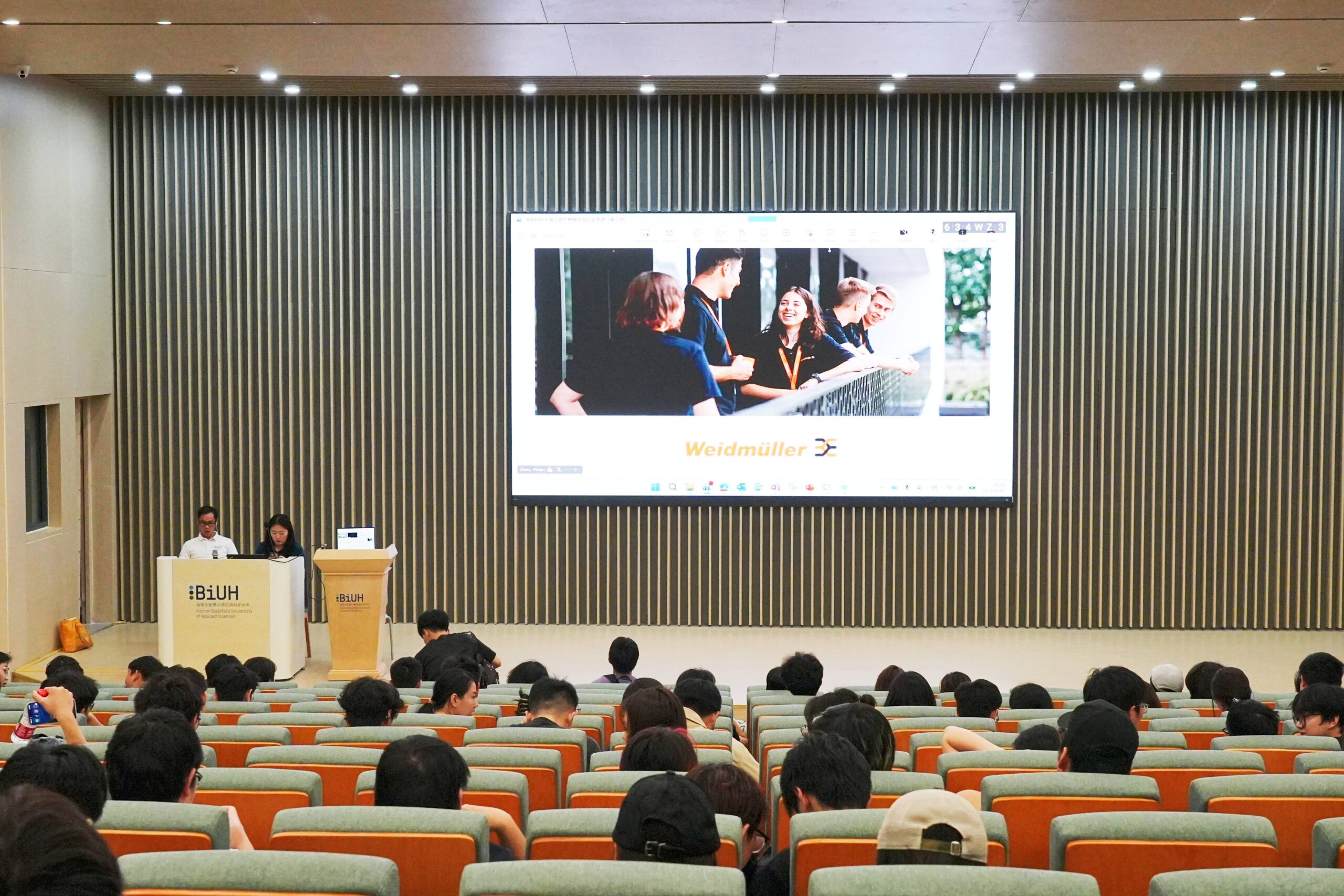
The line-up of companies was diverse and clearly structured:
Three German companies — Weidmüller, Vector Automotive Technology and Miele — together with the foreign-invested software firm KPIT (Shanghai) Software Technology, presented in a dedicated block covering automotive electronics, intelligent manufacturing, electrical connection technology and software, highlighting how work-integrated education aligns with international industry standards;
JD, a Fortune Global 500 company, and SF Express (Hainan), a leading platform enterprise, released positions in e-commerce operations, supply chain and logistics, and more — raising the calibre of the list;
Home-grown champions of the Hainan Free Trade Port — AUSCA International Oils and Grains, Huneng New Energy and Huawan Industrial Park — offered hands-on opportunities close to the industry frontline in grain and oil processing and trade, new energy, and industrial park operations;
Professional services and fast-growing innovative companies — Crazy Sports, Zhongtao Huayi Taxation Firm and H&D Creative — brought a diverse mix of roles in finance and tax consulting, sports operations and creative planning;
The on-campus AIGC training workshop jointly built by Zhiyun Digital Technology (OmniEdu) and Shendeng Technology brings real company projects, generative AI applications and content production onto campus, forming a closed loop of “company projects on campus, student practice on campus, skills aligned with industry” — extending industry–education integration from position supply to the building of on-campus practice scenarios.
From One-off Matches to Scale and Platform-based Cooperation
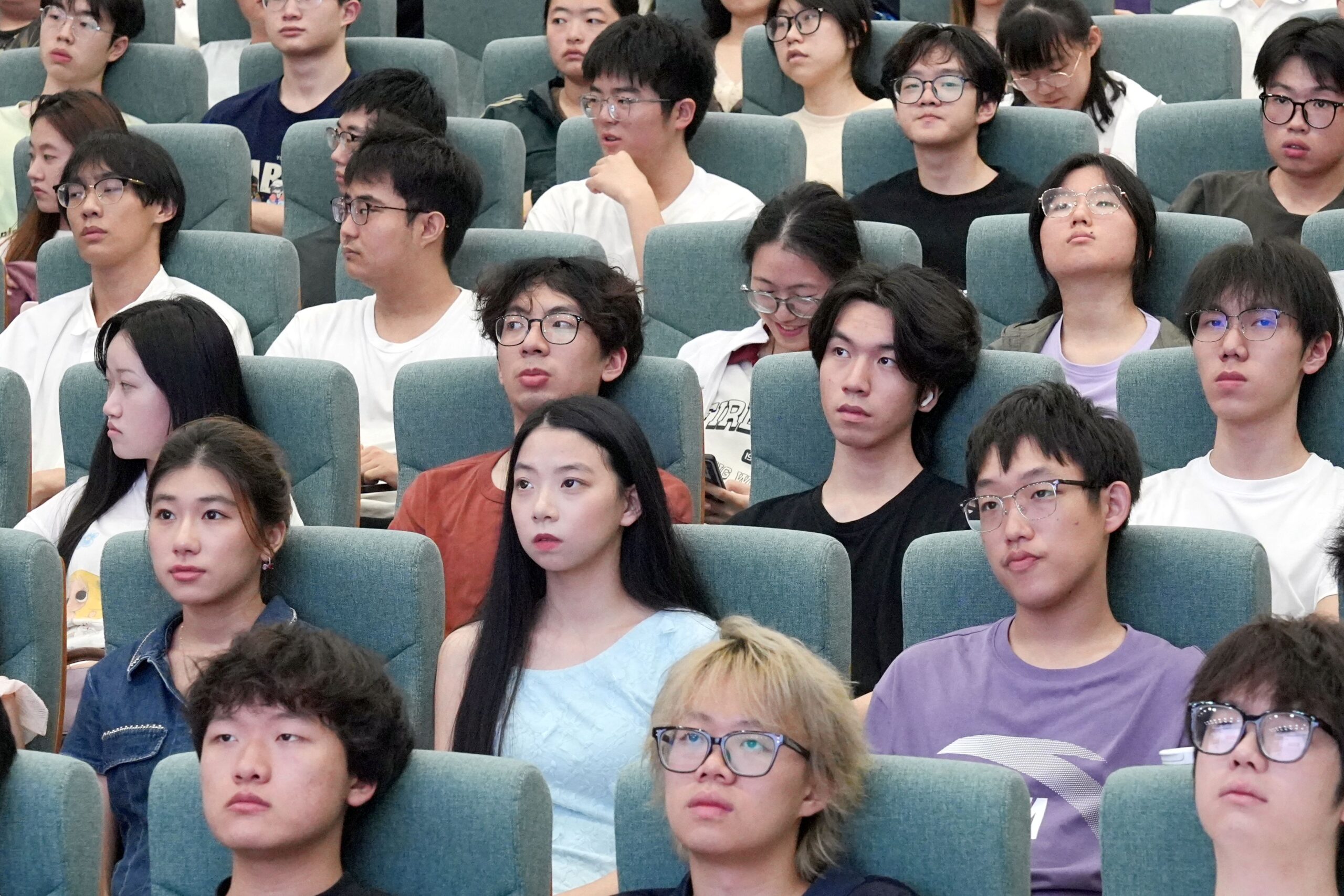
This year’s Integration Week was both a large-scale test of BiUH’s internship programme and a progress report on the university’s efforts to deepen industry–education integration in service of student growth. With the largest number of positions ever released, the event marks a shift from one-off, point-to-point matching towards large-scale organisation and platform-based coordination of internship supply.
Moving forward, BiUH will continue to place its work-integrated education model at the core, further expand its network of high-quality companies and strengthen the internship pipeline, making university–enterprise collaboration a regular and platform-based part of student development — so that more students can hone their global competence in real industry settings.
Which company would you most like to join? What questions do you have about internships? Leave a comment and tell us about your dream role and what is on your mind.
And if you know someone preparing for their internship, share this article with them. Follow BiUH’s official WeChat account for the latest news on internship openings, company sessions and campus events — delivered to you first.