

I am LI Yuheng from the Class of 2023 Digital Technologies majors at Hainan Bielefeld University of Applied Sciences. During this internship, I was deeply involved throughout the process, collaborating with the team to complete the physical realization and full-system debugging of the “Zhiyuan Lingxi X1” humanoid robot. My work comprehensively covered two core phases: mechanical integration and software/algorithm development.
1. Internship Overview & Core Features of the Robot
During the mechanical integration phase, I assisted the team in precisely assembling various components, which when laid out covered an area of over ten square meters, into a complete physical robot with multi-degree-of-freedom motion capabilities. Moving into the software and algorithm phase, I participated fully in software environment configuration, virtual simulation debugging, and VLA model training. A key focus was using sim-to-sim training to verify the rationality and stability of the robot’s control logic, laying a solid foundation for subsequent safe real-world operation.
This robot features a hybrid serial-parallel configuration arm and a differentially driven dual-shoulder joint design. It is equipped with Zhiyuan’s self-developed high-torque-density joint motors. The overall design follows a modular concept, supporting programmable control and AI multimodal visual perception. It can be further equipped with a VLA model, ultimately achieving a closed-loop “perception-decision-execution” task operation capability, demonstrating considerable flexibility and practicality.
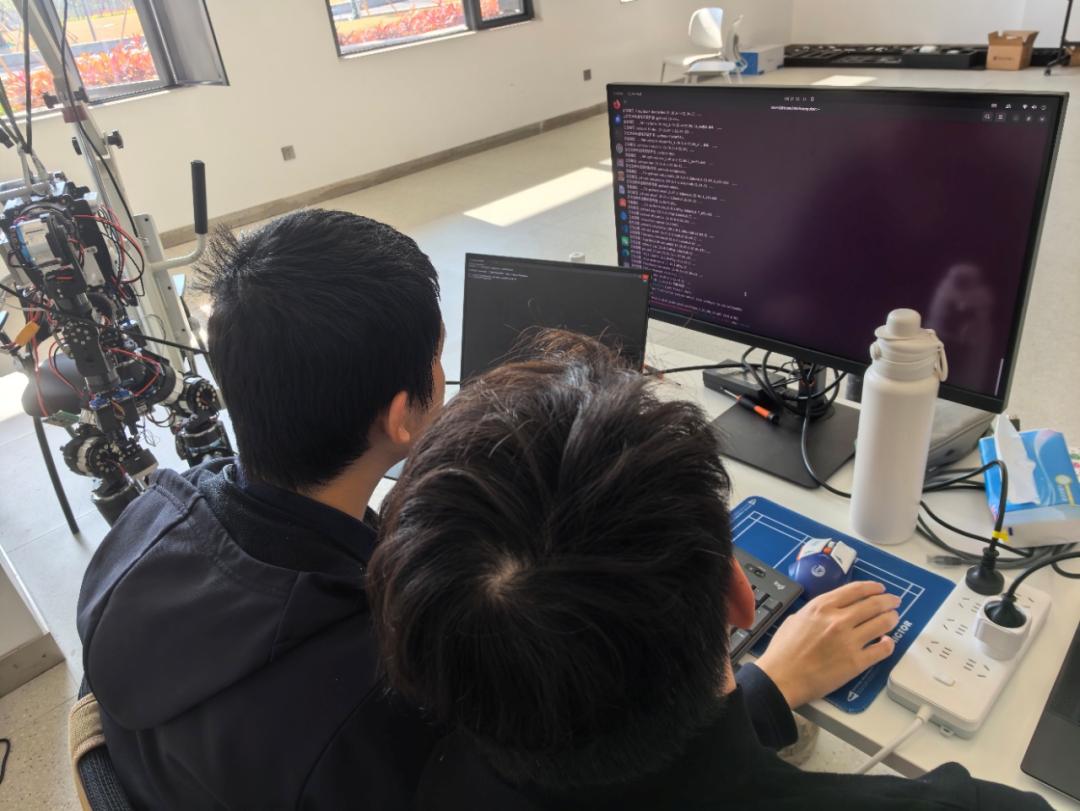
2. Hardware Integration
In the hardware integration stage, our team adopted a collaborative group approach, strictly following design blueprints to progressively advance the installation and securing of motors, robotic arms, various sensors, and structural components. This process demanded extremely high precision and meticulousness. My responsibilities included assisting in checking the tightness of structural screws to prevent component loosening during robot movement, as well as participating in verifying the correctness of sensor pin connections one by one to avoid sensor failure due to wiring errors. I also contributed to meticulously planning cable routing, participating in cable harness cutting, termination, and calibration. These efforts ensured the reliability of electrical connections and the coordination of mechanical movements, establishing a solid hardware foundation for subsequent software debugging.
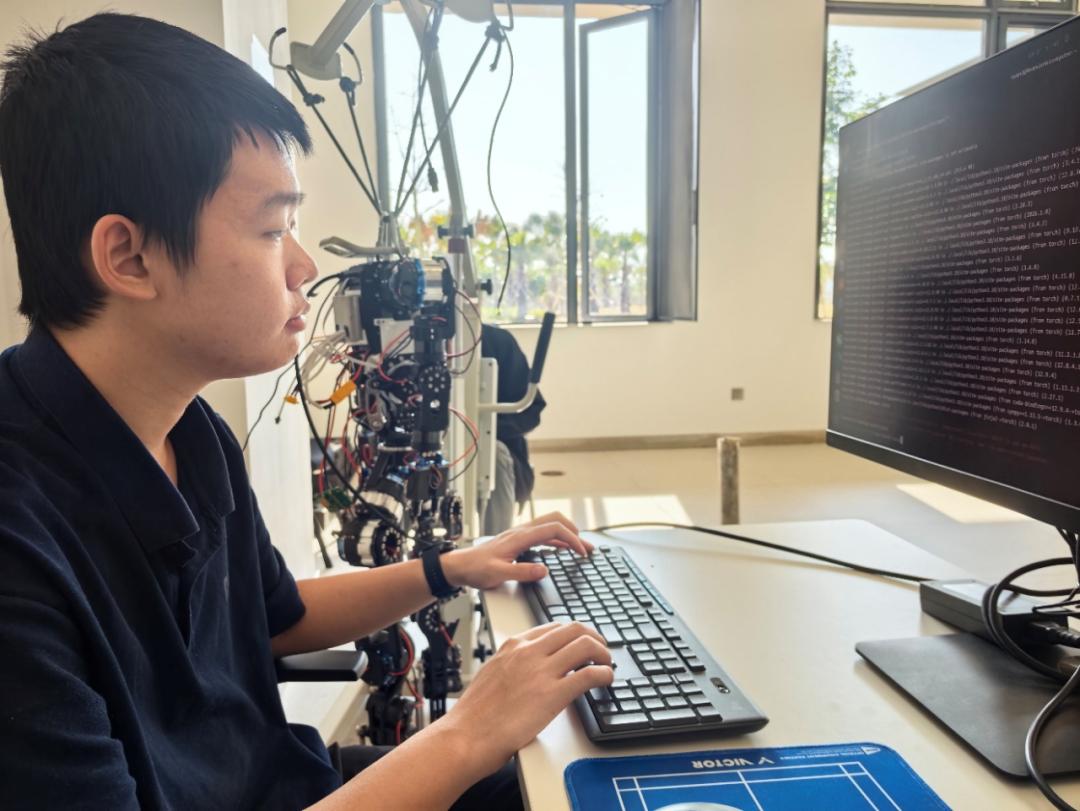
3. Technical Challenges in the Software & Algorithm Phase
Setting up the software environment was the first major technical challenge of this internship. We deployed the ROS toolchain, drivers, and simulation platform from scratch on a local Linux system. Throughout this, I was fully involved in troubleshooting version conflicts among dependency packages and rebuilding systems with accidentally deleted configurations, ultimately establishing a unified development environment bridging the virtual and real.
Subsequently, I participated fully in the sim-to-sim training of the VLA model, assisting in optimizing model parameters and correcting simulation issues. After completing virtual verification, we further advanced to sim-to-real verification on the physical robot. By updating model parameters, calibrating sensor data, and fine-tuning control strategies, we addressed performance degradation issues caused by the simulation-to-reality gap, achieving a seamless transition from virtual training to real-world operation.
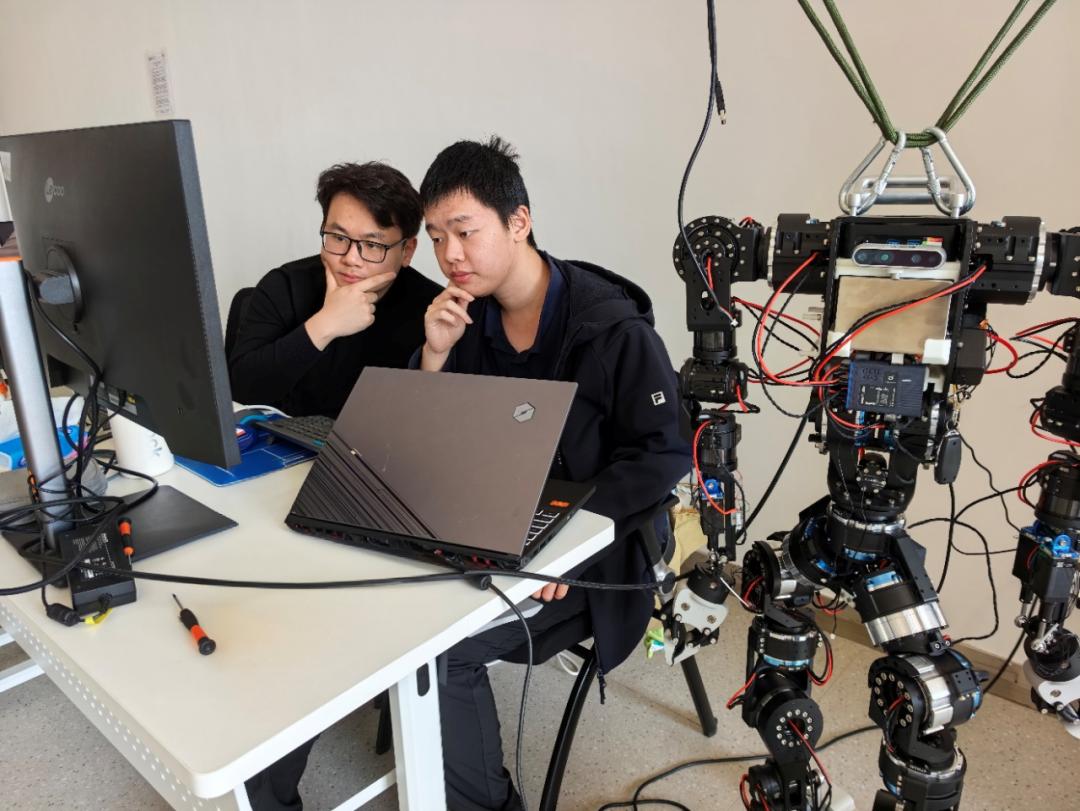
Looking back on the entire internship experience, I achieved a comprehensive breakthrough from theory to practice. From mechanical assembly and electrical integration to software deployment and algorithm training, I systematically grasped the full-stack development process of intelligent robots. I gained a deep appreciation for the crucial role of the sim-to-sim and sim-to-real closed-loop pipeline in the field of embodied intelligence. This engineering practice from zero to one not only deepened my understanding of robot system integration, AI algorithm deployment, and virtual-real fusion technology but also enhanced my hands-on operation, problem-solving, and teamwork skills. More importantly, it gave me a clear recognition of the technical key points and development potential within the field of intelligent robotics, further solidifying my career direction to delve deeply into this area. In the future, I will apply the knowledge gained from this internship to my subsequent studies and work, addressing my shortcomings, enhancing my professional competence, and striving to become a versatile technical talent that meets the industry’s needs.