

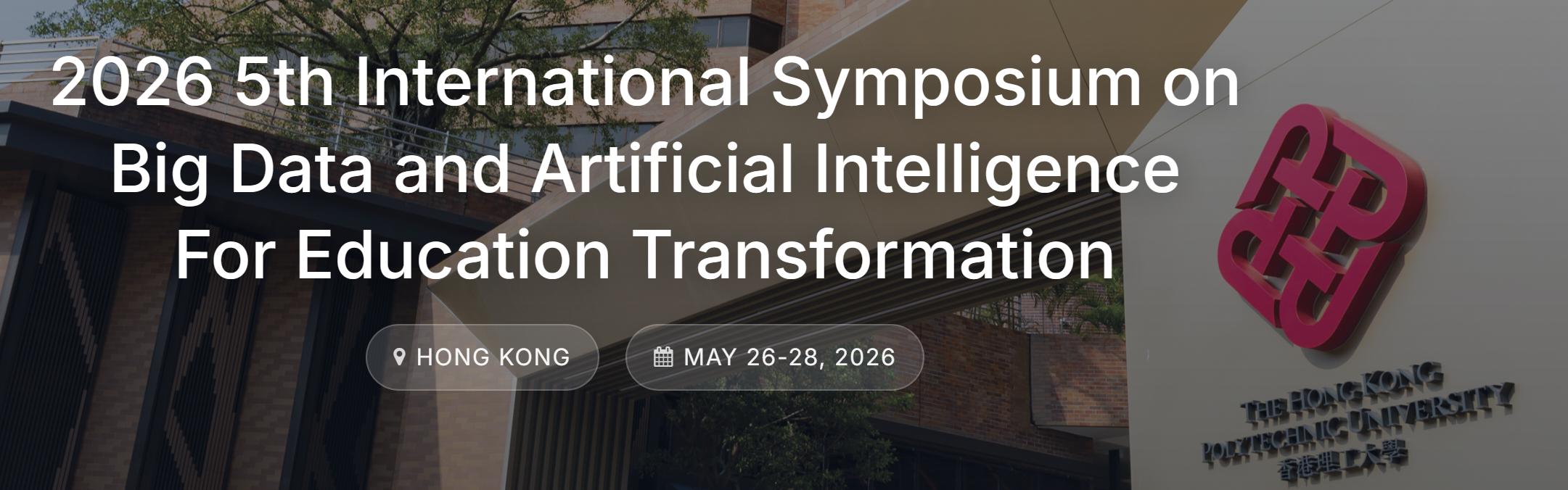
Recently, exciting news came from the 5th International Symposium on Big Data and Artificial Intelligence for Educational Transformation 2026 (ISBDAI 2026). Faculty members and students from the Computer Science program at BiUH published a total of five academic papers at this international conference. Their research covers several cutting-edge fields, including object detection, intelligent logistics scheduling, energy-efficient control of electric vehicles, and AI applications in healthcare.
Among them, the paper titled “AI-Assisted Energy-Efficient Control of EV under Traffic Signal Uncertainty”, completed by Dr. Ahmad Ali and WANG Yong, a second-year Computer Science student, under the supervision of Prof. Dr. ZENG Zhuoqi, won the Best Paper Award at this conference. This achievement fully demonstrates the innovation capability, research excellence, and international academic influence of BiUH faculty and students in artificial intelligence, big data, and intelligent systems applications.
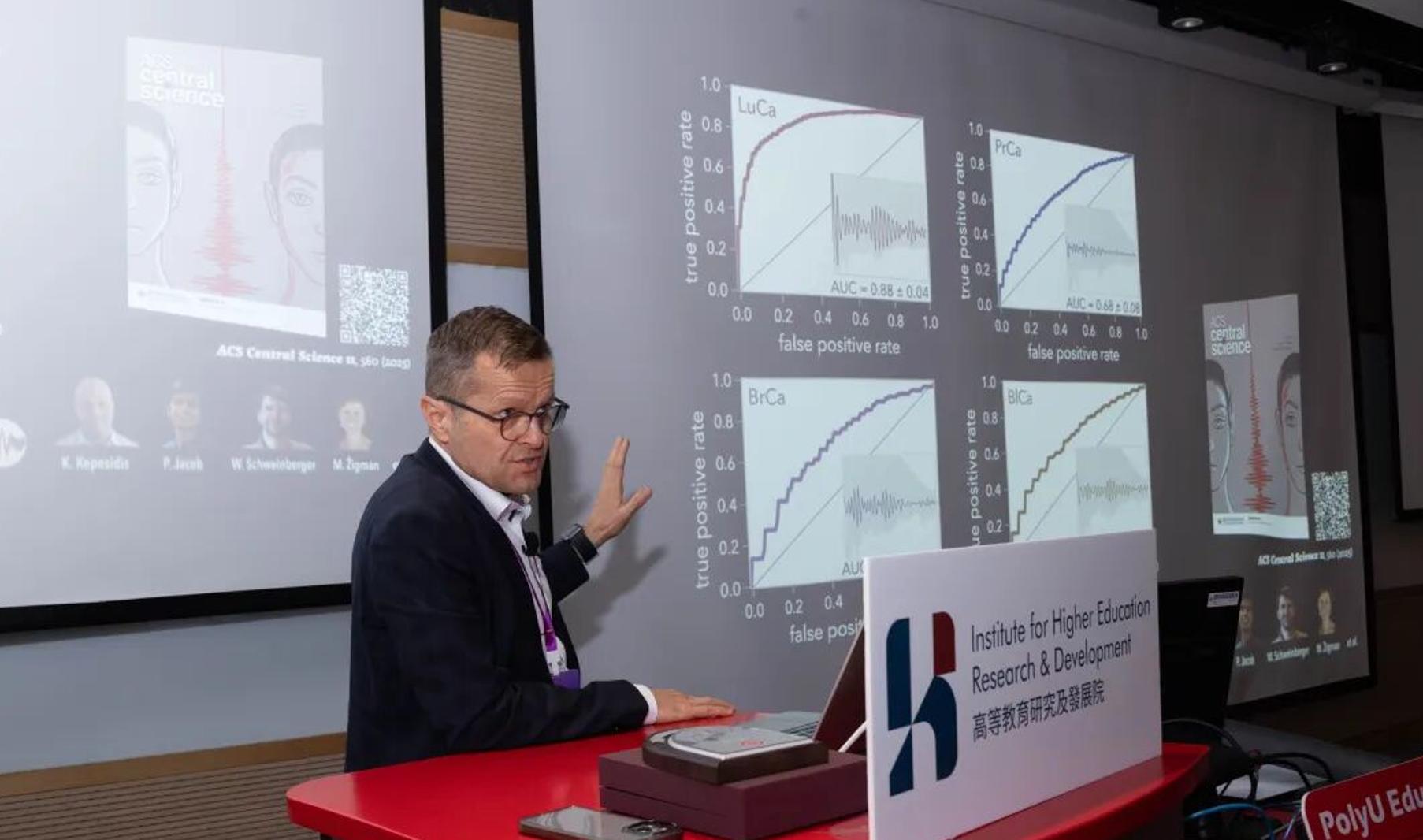
The 5th International Symposium on Big Data and Artificial Intelligence for Educational Transformation (ISBDAI 2026) brought together experts and scholars from universities, research institutions, enterprises, and educational management sectors around the world. The conference featured high-level academic exchanges on topics such as artificial intelligence, big data, educational innovation, and social development, and jointly explored new directions, models, and pathways for educational transformation in the AI era.
This year’s conference was chaired by Prof. Dr. CAO Jiannong , a renowned expert in computer science and AI education, IEEE Fellow, and Vice President of The Hong Kong Polytechnic University. The conference also invited a number of internationally renowned scientists, academicians, and experts in educational technology to deliver keynote speeches, including Prof. Dr. Ferenc Krausz, Nobel Laureate in Physics; Prof. Dr. Tshilidzi Marwala, United Nations Under-Secretary-General; Prof. Dr. M. James C. Crabbe from the University of Oxford; and Prof. Dr. Ramesh K. Agarwal, IEEE Fellow from Washington University in St. Louis.
The conference provided an interdisciplinary, international, and high-level academic cooperation platform for scholars worldwide. It also offered an important opportunity for BiUH faculty and students to present their research achievements and broaden their international academic horizons.
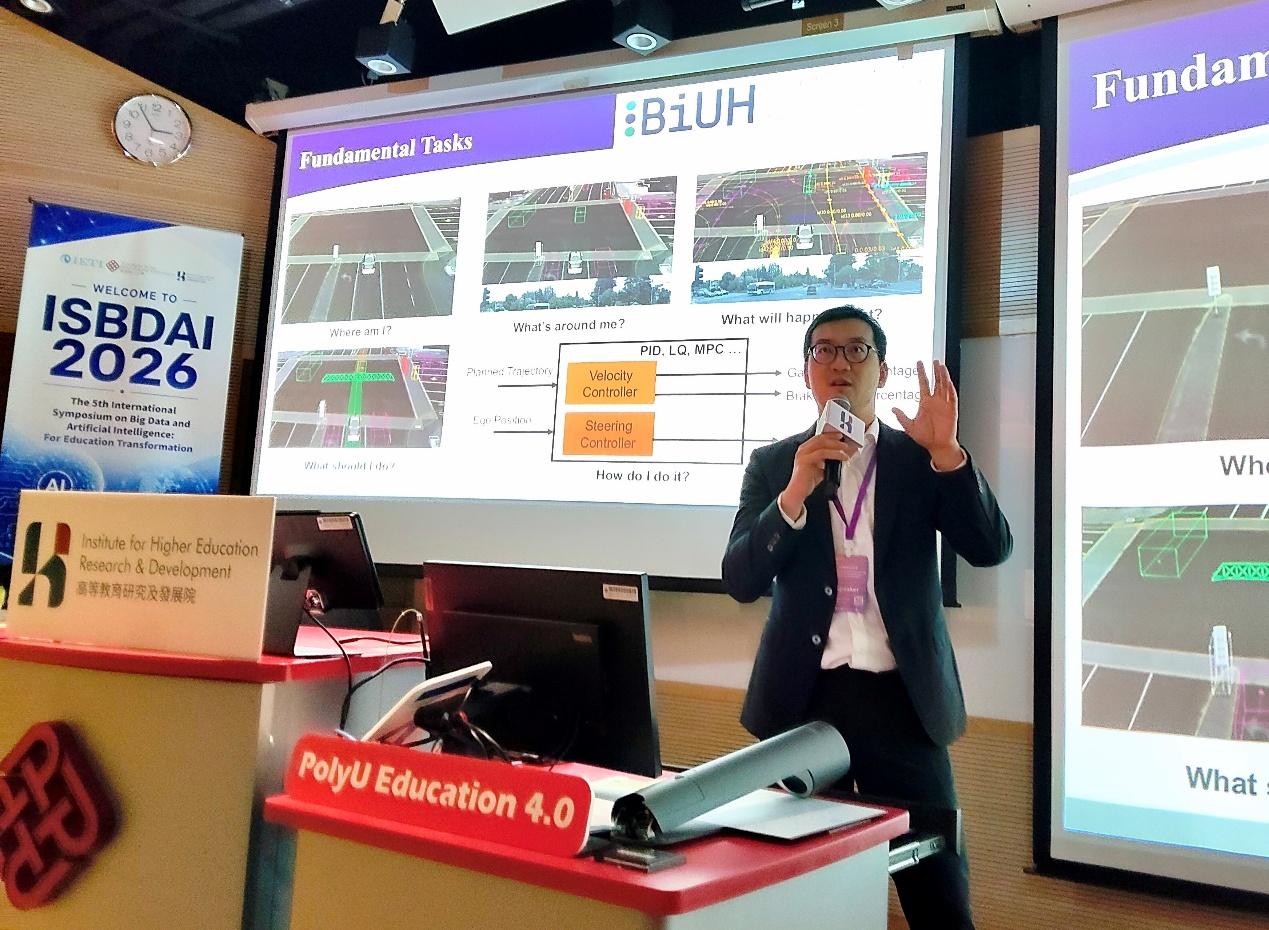
At ISBDAI 2026, faculty members from the Computer Science program actively guided students in research exploration and encouraged them to participate in real-world research projects. As a result, BiUH faculty-student teams achieved significant progress in several cutting-edge research areas. A total of five papers were accepted and published by the conference.
Paper 1 SeaGhost-YOLO: Task-Driven Parameter-Compact Detection for UAV Maritime Search-and-Rescue
First Author: FU Yuhan
This paper was mainly completed by Fu Yuhan, a third-year Computer Science student at BiUH. The research focuses on small-object detection in UAV-based maritime search-and-rescue scenarios and proposes a lightweight object detection model named SeaGhost-YOLO. By introducing a P2–P4 high-resolution detection pyramid and a Selective GhostDeep deep compression strategy, the model effectively improves the detection accuracy of key rescue targets such as humans and buoys at sea, while significantly reducing the number of model parameters. This research has strong application value in intelligent UAV search and rescue, maritime emergency response, and intelligent perception systems.
Paper 2 Stage-wise LoRA-optimized YOLO11s for Few-shot Defect Detection in Engineering Education Laboratories
Authors: WANG Yong
Co-Author: Li Yizheng, et al.
This paper was mainly completed by Wang Yong, a second-year Computer Science student at BiUH, with Li Yizheng, a first-year Economic Engineering student, participating in part of the experimental work. The research addresses the problem of few-shot defect detection in university engineering laboratories and proposes a stage-wise LoRA-optimized YOLO11s algorithm. The method aims to improve defect recognition accuracy and generalization ability in small-sample and complex scenarios. It can be applied to industrial training quality inspection, intelligent inspection of laboratory equipment, and automated teaching management, demonstrating strong practical significance and promising application prospects.
Paper 3 Reliability-Driven Scheduling of Smart Delivery Truck with Robotic Vehicles
Authors: Prof. Dr. Mehdi Foumani, LONG Junwei, et al.
Supervisor: Prof. Dr. ZENG Zhuoqi
Under the supervision of Prof. Dr. ZENG Zhuoqi, this paper was mainly completed by Prof. Dr. Mehdi Foumani, with LONG Junwei, a first-year BiUH student, participating in part of the experimental work. The paper studies collaborative delivery between smart trucks and robotic vehicles, focusing on reliability-driven scheduling in vehicle-to-vehicle logistics systems. It develops a stochastic mixed-integer nonlinear programming model and conducts an in-depth exploration of intelligent delivery network design and robotic vehicle scheduling optimization. This research provides important reference value for smart logistics, automated delivery, and intelligent transportation systems.
Paper 4 Preparing Operating Rooms for Artificial Intelligence: A Systematic Change Management Framework
Authors: XIONG Zipan, et al.
Supervisor: Prof. Dr. ZENG Zhuoqi
This paper focuses on the application and implementation of artificial intelligence technologies in operating room environments and proposes a systematic change management framework for AI adoption in operating rooms. The study applies the Best–Worst Method to prioritize pre-operative, intra-operative, and post-operative processes. By integrating medical data management, clinical workflow optimization, and intelligent decision support, the research provides a practical framework reference for large hospitals seeking to introduce artificial intelligence technologies into operating rooms.
Paper 5 AI-Assisted Energy-Efficient Control of EV under Traffic Signal Uncertainty
Authors: Dr. Ahmad Ali, WANG Yong, et al.
Supervisor: Prof. Dr. ZENG Zhuoqi
Under the supervision of Prof. Dr. ZENG Zhuoqi, this paper was mainly completed by Dr. Ahmad Ali, with WANG Yong, a second-year Computer Science student, serving as the second author and participating in part of the experimental work. The research focuses on energy-efficient control of electric vehicles under traffic signal uncertainty. It uses AI-assisted methods to optimize vehicle energy management strategies and improve the energy efficiency of electric vehicles in complex traffic environments. This research has important application value in intelligent transportation, green mobility, electric vehicle control, and low-carbon transportation systems.
Notably, this paper won the Best Paper Award at ISBDAI 2026 for its solid research foundation, innovative technical approach, and promising application prospects.
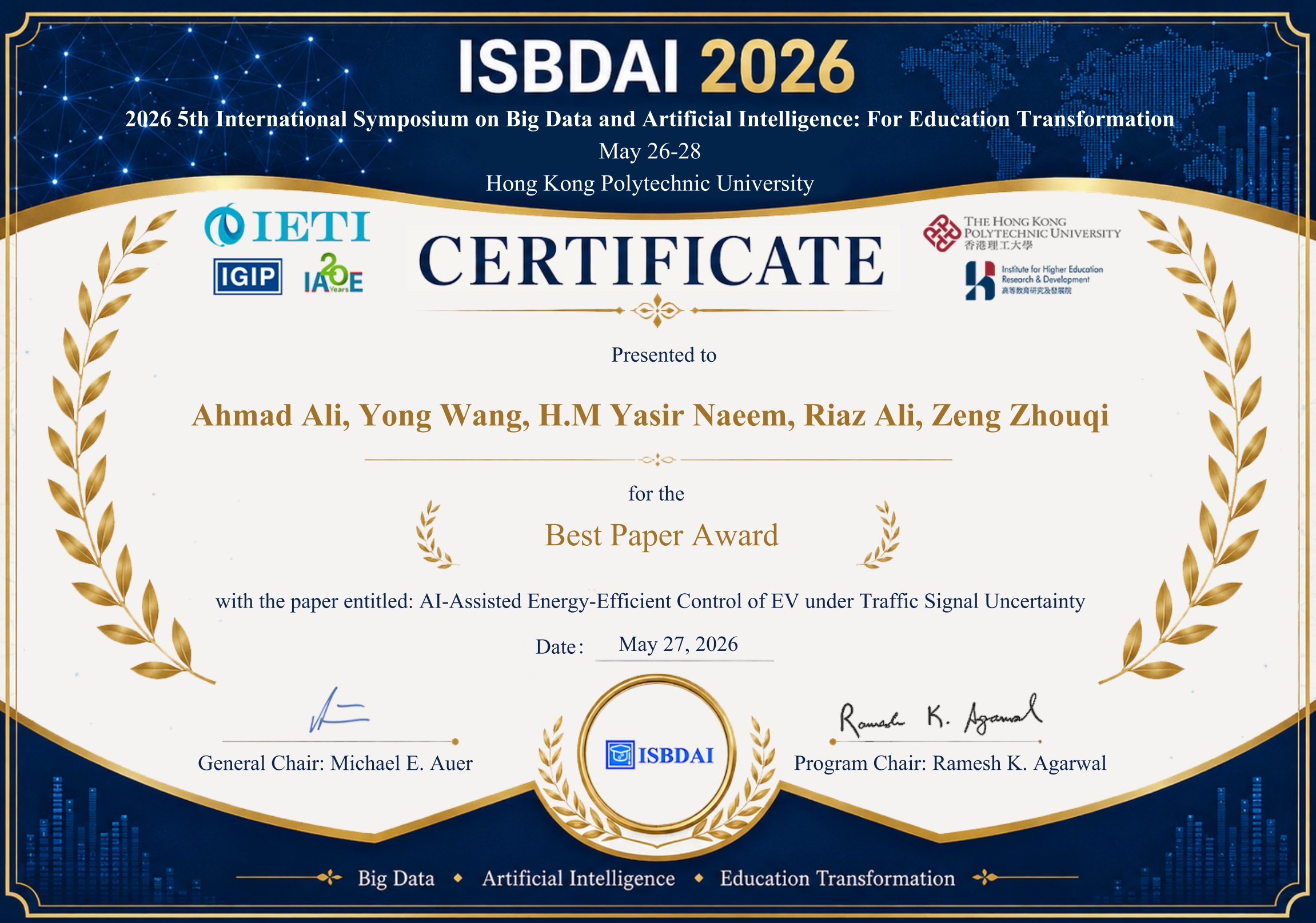
The Best Paper Award is one of the most prestigious honors at international academic conferences. It is usually awarded to outstanding papers that demonstrate excellence in research innovation, technical depth, paper quality, academic value, and application potential.
The award-winning paper “AI-Assisted Energy-Efficient Control of EV under Traffic Signal Uncertainty” reflects the research team’s in-depth exploration of AI-enabled intelligent transportation and electric vehicle control. It also fully demonstrates BiUH’s continuous progress in interdisciplinary research innovation, student research training, and international academic exchange.
The outstanding achievements of BiUH faculty and students at ISBDAI 2026 vividly reflect the university’s commitment to research-based education, practice-oriented education, and innovation-driven talent development.
In recent years, faculty members in the ComputerScience program have consistently emphasized the cultivation of students’ research capabilities. Students are encouraged to conduct research based on real-world problems and actively participate in international academic exchanges. In areas such as artificial intelligence, big data, intelligent systems, smart transportation, intelligent manufacturing, and educational technology, faculty-student teams have continued to explore and achieve positive results.
From lower-year undergraduate students publishing papers at international conferences to faculty teams continuously producing high-quality research outcomes in frontier fields, BiUH is gradually building a strong academic ecosystem characterized by faculty guidance, student participation, project-driven research, and research-enhanced teaching. Against the backdrop of the rapid development of artificial intelligence, BiUH will continue to support faculty and students in participating in international academic exchanges, expanding their global perspectives, improving their research capabilities, and bringing more high-quality research achievements to the international stage.
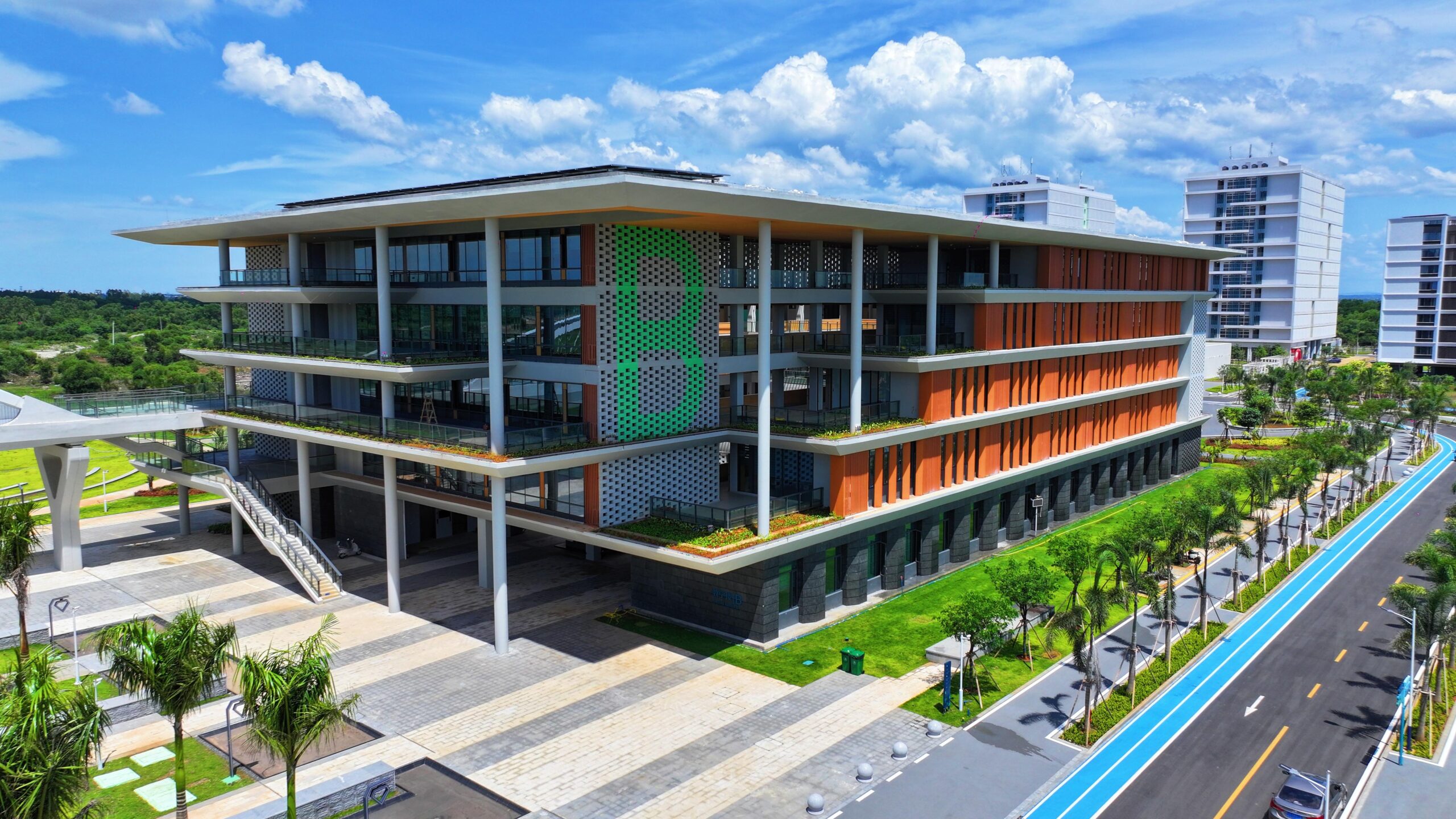
The outstanding achievements attained by BiUH faculty and students at ISBDAI 2026 represent an important achievement for BiUH in demonstrating the research strength of its Computer Science program and the quality of its talent cultivation. It also reflects the university’s continued efforts to promote international education, strengthen student research training, and deepen applied research in artificial intelligence.
Looking ahead, BiUH will continue to support faculty and students in conducting high-level research at the forefront of international academia. The university will encourage students to develop innovative thinking, engineering practice capabilities, and academic communication skills through real research projects, continuously enhancing its academic competitiveness and international influence.
Congratulations once again to all paper authors, supervisors, and faculty-student research teams involved!