

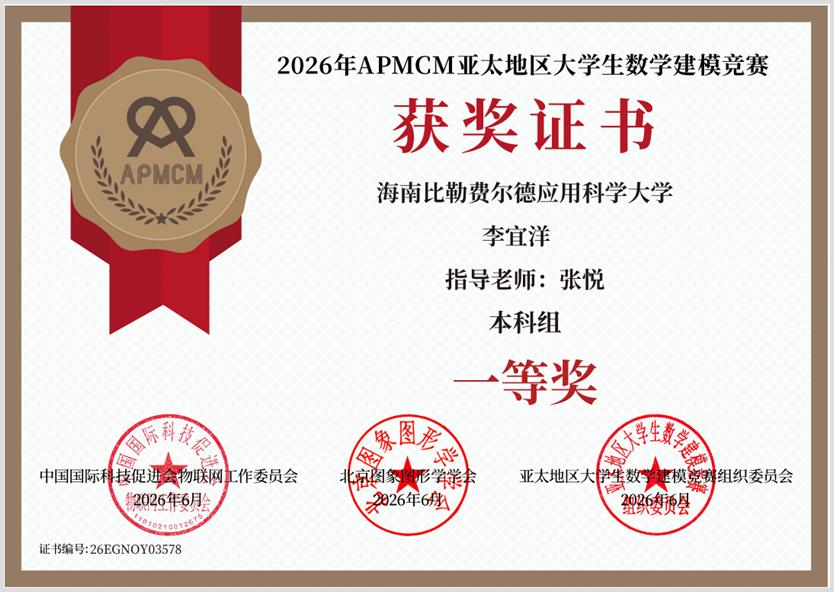
Recently, the results of the Chinese-language track of the 16th APMCM Asia-Pacific Mathematical Contest in Modeling (2026) were officially announced. LI Yiyang, a 2025 cohort student majoring in Digital Technologies at Hainan Bielefeld University of Applied Sciences, won First Prize for her project entitled “Prediction and Risk Assessment of Finished-Water Turbidity in a Water Treatment Plant under Strong Control, Weak Coupling, and Operational-Regime Shifts: Causal Identification, Bayesian Time-Delay Estimation, and Hybrid Mechanistic–Data-Driven Modeling.”
The competition was held from June 12 to 15, 2026, attracting more than 9,000 students from 690 universities. The organizing committee received a total of 3,237 submissions. Following preliminary screening, online evaluation, panel review, and final reassessment, 178 entries were awarded First Prize, representing approximately 5.5% of all submissions.
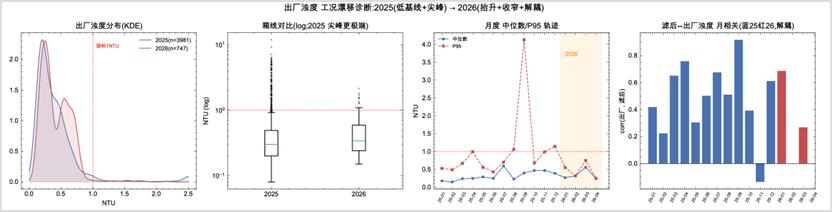
This year’s problem was based on 15 consecutive months of operational monitoring data from a water treatment plant. Participants were required to identify the key factors affecting finished-water turbidity, develop a dynamic forecasting model, and establish a water-quality risk assessment framework. What appeared to be a clearly defined problem, however, proved far from straightforward once the data were examined.
After passing through multiple treatment stages, including coagulation, sedimentation, and filtration, the finished-water turbidity remained consistently low and had become only weakly associated with several upstream indicators. At the same time, the operational data showed significant regime changes across different years. The 2025 data were characterized by a “low baseline with occasional spikes,” whereas the 2026 data showed “a moderately elevated baseline with greater overall stability.” This meant that correlation in the data did not necessarily imply causation in the actual treatment process. Likewise, a model that performed well on historical data might not remain reliable when operating conditions changed.
LI Yiyang therefore made “correlation does not imply causation” the central theme of the paper. She first used correlation coefficients, mutual information, and machine-learning-based feature analysis to identify relationships among the variables. She then introduced time-series causal discovery methods to separate genuine causal effects from spurious correlations driven by shared factors such as seasonality. Bayesian methods were subsequently applied to estimate the time delays associated with different process variables, while water-treatment mechanisms were integrated with data-driven models to perform turbidity forecasting and dynamic risk assessment.
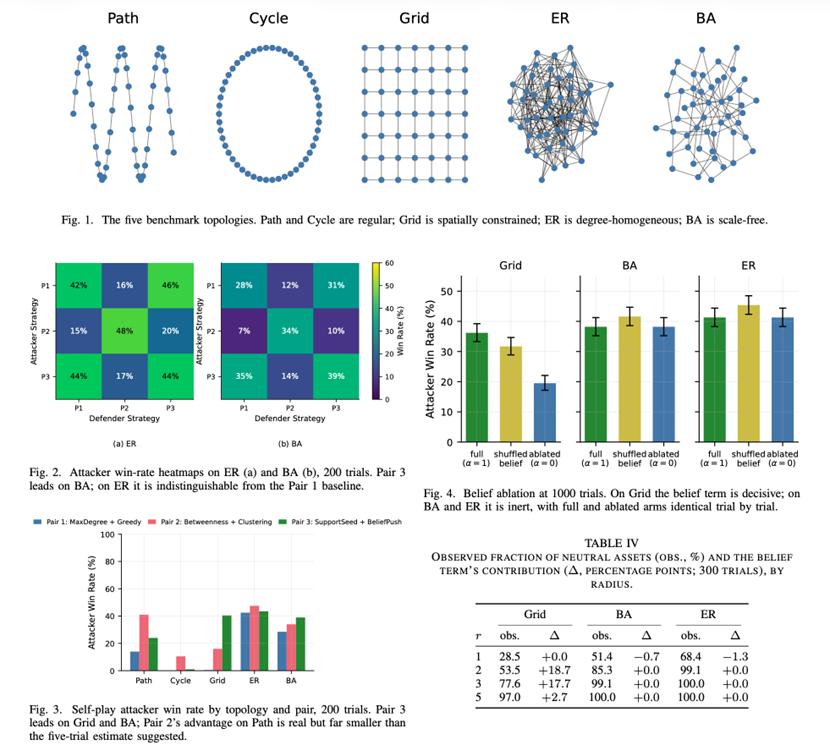
The final paper developed a coherent methodological chain comprising causal identification, Bayesian time-delay estimation, hybrid mechanistic–data-driven forecasting, and risk-dynamics evaluation. Yet its real purpose was not to demonstrate how many sophisticated models had been used. Rather, it sought to answer a more fundamental question: when working with data that are strongly controlled, weakly coupled, and subject to operational-regime shifts, how can one honestly determine what a model can explain—and what it cannot?
However, more than the models and methods themselves, what LI Yiyang most hoped to share was the way of thinking She had gradually developed through several competitions.
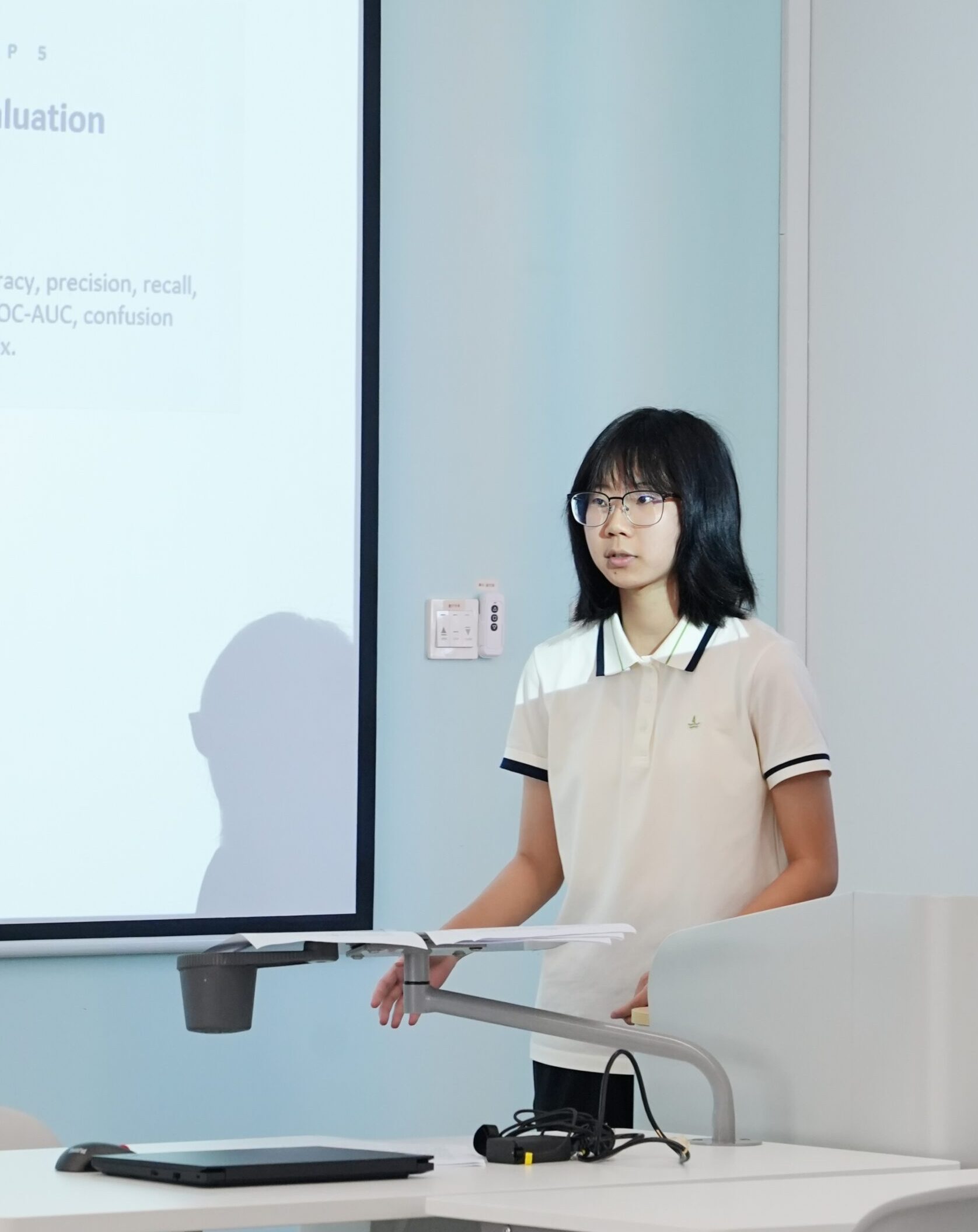
From the university’s Gezhi Cup to MathorCup and then to the Asia-Pacific Mathematical Contest in Modeling, LI Yiyang took on a variety of problems, repeatedly navigating tight deadlines, unfamiliar fields, and uncertain outcomes. Reflecting on this achievement, her first thought was not about any particular model, but about how to view the gains and losses of a competition:
“From the university’s Gezhi Cup to MathorCup and then to this competition, I have achieved fairly encouraging results along the way. Yet if I were to share one lesson from these experiences, it would be this: do not focus too much on the final ranking—embrace every step of the journey. I try not to dwell too much on the outcome because results inevitably involve a degree of chance. The evaluation of mathematical modeling papers is highly subjective: every team submits a paper, and the judges may have only a few minutes to assess its significance. Every argument and every figure speaks on your behalf, yet any of them may also be passed over at a glance. Since so much about the outcome lies beyond your control, take everything you can control to the fullest extent possible. Push yourself to your limit before clicking the submit button—at that moment, the effort itself is the greatest reward. I have increasingly come to believe that what a competition truly leaves behind is not the certificate, but the way of thinking repeatedly refined over those intense days. That is what you can truly carry forward.”
This calm perspective on results does not imply any reduction in commitment to the competition. On the contrary, it brings the focus back to what participants can genuinely control: whether they have understood the problem, handled the data with care, validated their models, explained every figure clearly, and, before submission, produced the most responsible and complete piece of work they could.
A certificate records a single outcome. The hesitation, judgment, rejection, and reconstruction experienced under tight time constraints, however, ultimately become the confidence and composure needed to face the next problem.
In mathematical modeling, participants can easily fall into a common misconception: the more methods they use and the newer the models appear, the more “innovative” their work must be. Yet meaningful innovation rarely comes from packing every possible technique into a paper. It comes from identifying the question most worth pursuing and building around it a complete, coherent, and testable chain of reasoning. LI Yiyang summarized this understanding as follows:
“To make a paper stand out, you need to focus on the most challenging and innovative part of the problem—even if the idea may still be imperfect. Writing a mathematical paper and conducting genuine research are fundamentally the same: both are about identifying problems and solving them. So do not be afraid if flaws emerge in your central idea along the way. Discovering problems, correcting the data, and acknowledging limitations within the paper can themselves constitute a major form of innovation—sometimes even more compelling than an elegant conclusion that cannot withstand scrutiny. When I worked on Problem B in our university-level Gezhi Cup, my immediate reaction was ‘Bayesian.’ Whether or not it would ultimately work, we built the entire paper around that idea and explored it as thoroughly as possible. The same was true in this competition. From beginning to end, I kept returning to one central theme—‘correlation does not imply causation’—and developed and refined the paper around it. Rather than producing a paper that is comprehensive yet unremarkable, it is better to hold firmly to one central proposition and push it further than others would dare to go.”
“Even if it is imperfect” does not mean clinging to a conclusion that has already been disproved by the evidence. Rather, it means not abandoning a genuinely worthwhile direction simply out of fear of failure.
Hypotheses can be overturned, models can be revised, and conclusions may turn out to be less elegant than originally imagined. What matters is whether one can identify flaws in the initial reasoning, return to the data and evidence for re-examination, and clearly explain the scope and limitations of the method.
This attitude runs throughout the paper: it does not equate statistical correlation with actual causation; it does not use attractive results produced by random data splitting to conceal the difficulty of forecasting across different operating regimes; and it does not overlook the risk of instability in a new environment merely because a complex model achieves higher accuracy on a particular dataset. Rather than offering an overconfident answer, it is more valuable to state honestly what is known and what remains unknown. Recognizing these boundaries is itself an essential part of scientific thinking.
From the “Bayesian” approach explored in the Gezhi Cup to the principle that “correlation does not imply causation” in this competition, what has endured is not any single fixed method, but a consistent habit of approaching problems: identifying the most important underlying tension, pursuing it through sustained questioning, and accepting that one’s initial judgment may need to be revised in light of the data.
In today’s mathematical modeling competitions, artificial intelligence has become almost impossible to avoid. Competition problems may come from unfamiliar fields such as water treatment, transportation, finance, medicine, or industrial production. Within a very limited time, participants must understand the background, gather information, process data, write code, and complete a paper. AI can help them enter unfamiliar domains more quickly and assist with code debugging, information organization, and written expression. Yet the more powerful the tool becomes, the more essential human judgment is.
“Use AI well, but never let it think in your place—a paper must have its own style and sense of aesthetics. Today’s competition problems come from a wide range of industries and disciplines, so we do need AI to help us quickly understand unfamiliar fields. There is no need to shy away from that. But what I want to emphasize is this: when judges read your paper, they are reading your entire chain of reasoning. AI can help you build the framework and refine the language, but it cannot give the paper the distinctive quality of having been written by a particular person. In a strong paper—from the choices that shape its central argument and the way its figures are presented to the rhythm of its language—the author’s judgment and aesthetic sense should be visible throughout. Your thinking must be present on every page; otherwise, however polished the paper may be, it remains merely a report without an author.”
AI can generate the name of a model, but it cannot decide whether that model is suited to the real-world problem at hand. It can quickly produce a figure, but it cannot guarantee that the pattern shown is more than a coincidence. It can polish a paragraph, but it cannot determine on the author’s behalf what the paper is ultimately trying to say. A paper that truly belongs to its author must contain not only results, but also choices. Why was a particular variable excluded? Why was this line of reasoning adopted? When a model fails to perform as expected, should its parameters be adjusted, or should the underlying assumptions be re-examined? Does a seemingly accurate conclusion carry genuine explanatory meaning? These judgments, which cannot be outsourced, are what place the human author behind the paper.
As obtaining answers becomes increasingly easy, education must cultivate more than the ability to arrive at an answer. It must also develop the ability to evaluate that answer, explain it, and take responsibility for it.
Techniques may become outdated, but a strong foundation determines how far one can go:Methods evolve, software is updated, and tools that appear advanced today may soon be replaced by newer technologies. But mathematical modeling is not a contest of model names. What truly enables knowledge and skills to transfer from one problem to the next is a firm grasp of fundamental concepts—the ability to analyze, derive, and make judgments anew when faced with unfamiliar questions.
Therefore, the final—and most fundamental—point in LI Yiyang’s reflection is this:
“Whatever competition you take part in, never neglect the foundational disciplines. In the end, mathematical modeling is never truly about using the most sophisticated or eye-catching model. It comes down to how deeply you understand the underlying tools—probability, differential equations, optimization, and others. Only with that understanding can you make bold choices at critical moments and explain why a result should be trusted. This knowledge may appear simple, but it carries real strength. It is the deepest source of confidence you can bring into any competition or research project. Techniques may become outdated and tools may change, but only by building a solid foundation can you withstand one increasingly difficult problem after another.”
The paper draws on a range of methods, including causal analysis, Bayesian identification, differential equations, machine learning, extreme value theory, and Markov processes. Yet behind all of them lie the same fundamental bodies of knowledge: calculus, linear algebra, probability and statistics, differential equations, and optimization. Only by truly understanding these foundations can one know why a model works—and under what conditions it may fail. Such understanding makes it possible to remain appropriately skeptical when sophisticated tools produce seemingly impressive results, and to build an original analytical pathway rather than relying on ready-made templates when confronted with an entirely new problem.
Foundational disciplines may not provide an immediate answer to every question, but they continually expand the boundaries of what a person is capable of understanding.
The significance of mathematical modeling has never been limited to using mathematics to solve a single problem. It takes students beyond the idealized conditions of textbooks and brings them face to face with missing data, complex relationships, and uncertain outcomes in the real world. It connects mathematics, disciplinary knowledge, programming, and practical problems. It also gradually teaches students how to make well-founded judgments when no standard answer is available.
A First Prize is an affirmation of one period of hard work. Yet more valuable than the award itself is the attitude a student develops through exploration: When facing results, do not place all meaning in the final ranking. When pursuing innovation, do not allow complexity or novelty to obscure the problem itself. When using AI, do not surrender your own judgment to the tool. When looking toward the future, trust that foundational knowledge remains the most reliable source of confidence.
These principles may sound abstract, but ultimately they are reflected in every concrete action: checking the data one more time, asking “why” once more, being willing to start again after discovering an error, and carefully revising a figure, a formula, or a paragraph before submission.
At the end of her reflection, LI Yiyang wrote:
“May everyone find fulfillment in the process, and may each of us encounter a problem that makes our eyes light up—one we simply cannot leave unsolved.”
May more students encounter such a problem. And may every journey undertaken with care become a source of greater confidence—steadier, clearer, and more composed—when the next challenge arrives.