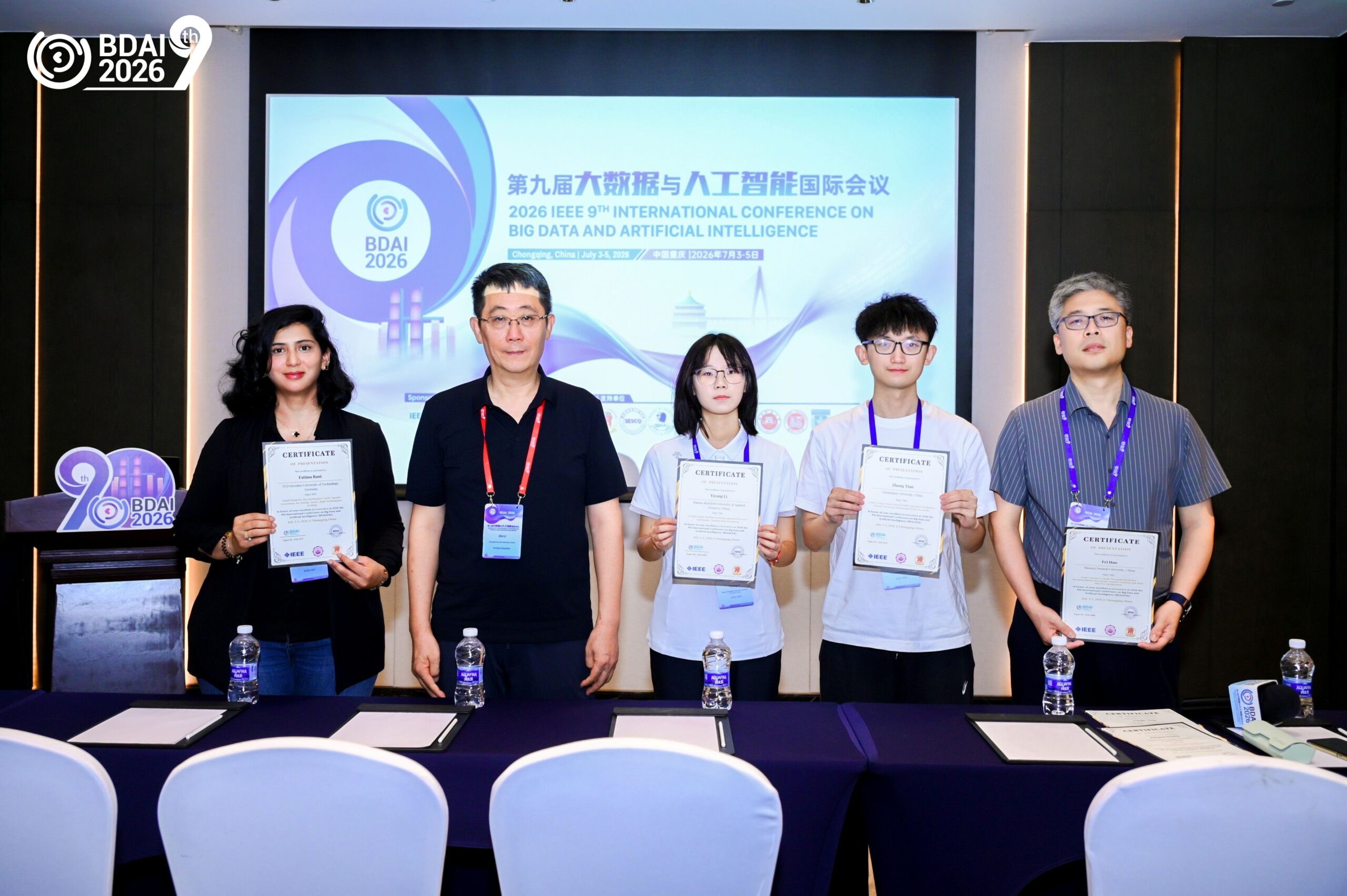

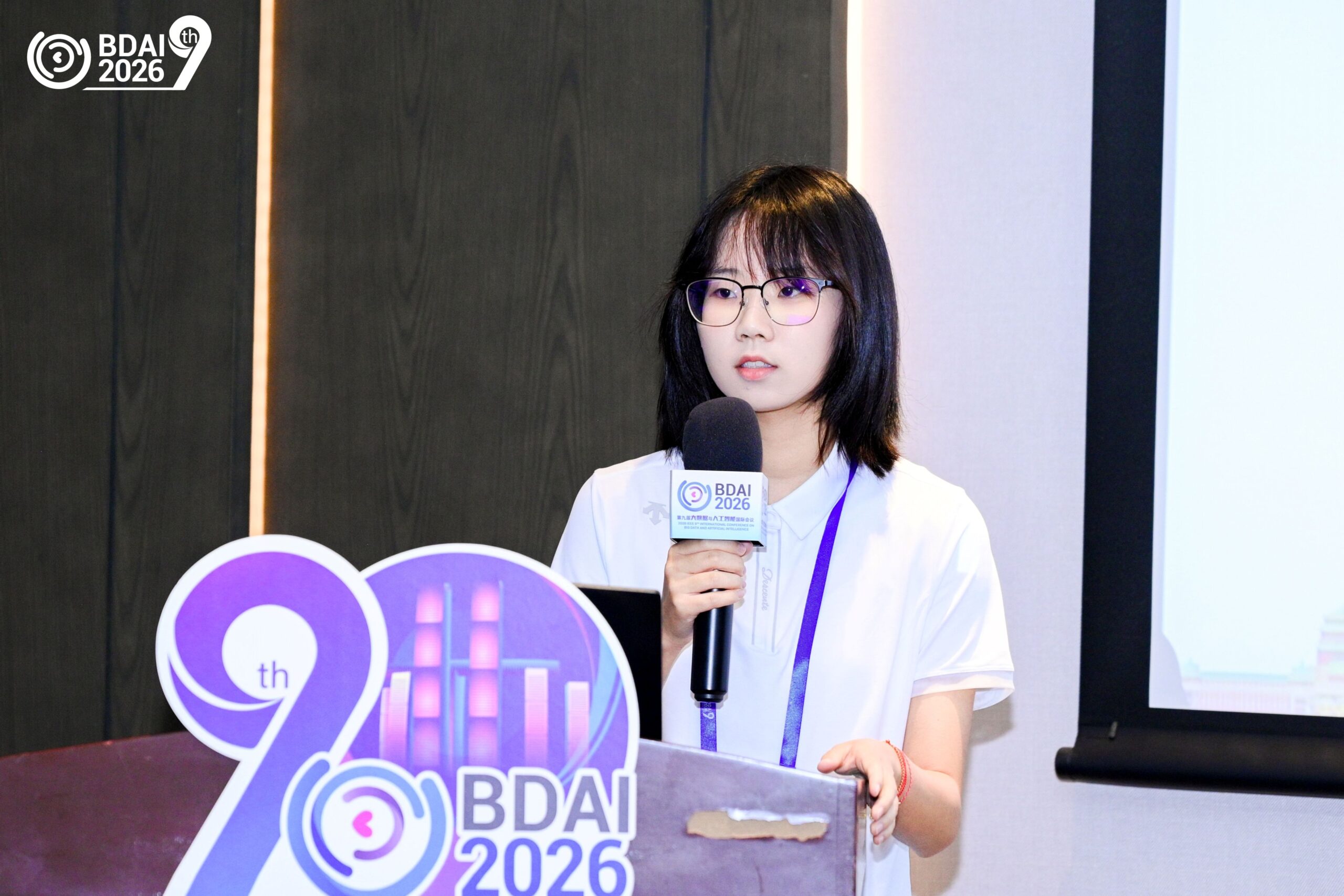
July 3–5, 2026 IEEE 9th International Conference on Big Data and Artificial Intelligence (BDAI 2026) was held in Chongqing. LI Yiyang, a first‑year student majoring in Digital Technologies (Class of 2025) from BiUH, participated in the conference and presented her paper entitled “A Lightweight Machine Learning Approach for Post‑Earthquake Tsunami Risk Screening.”
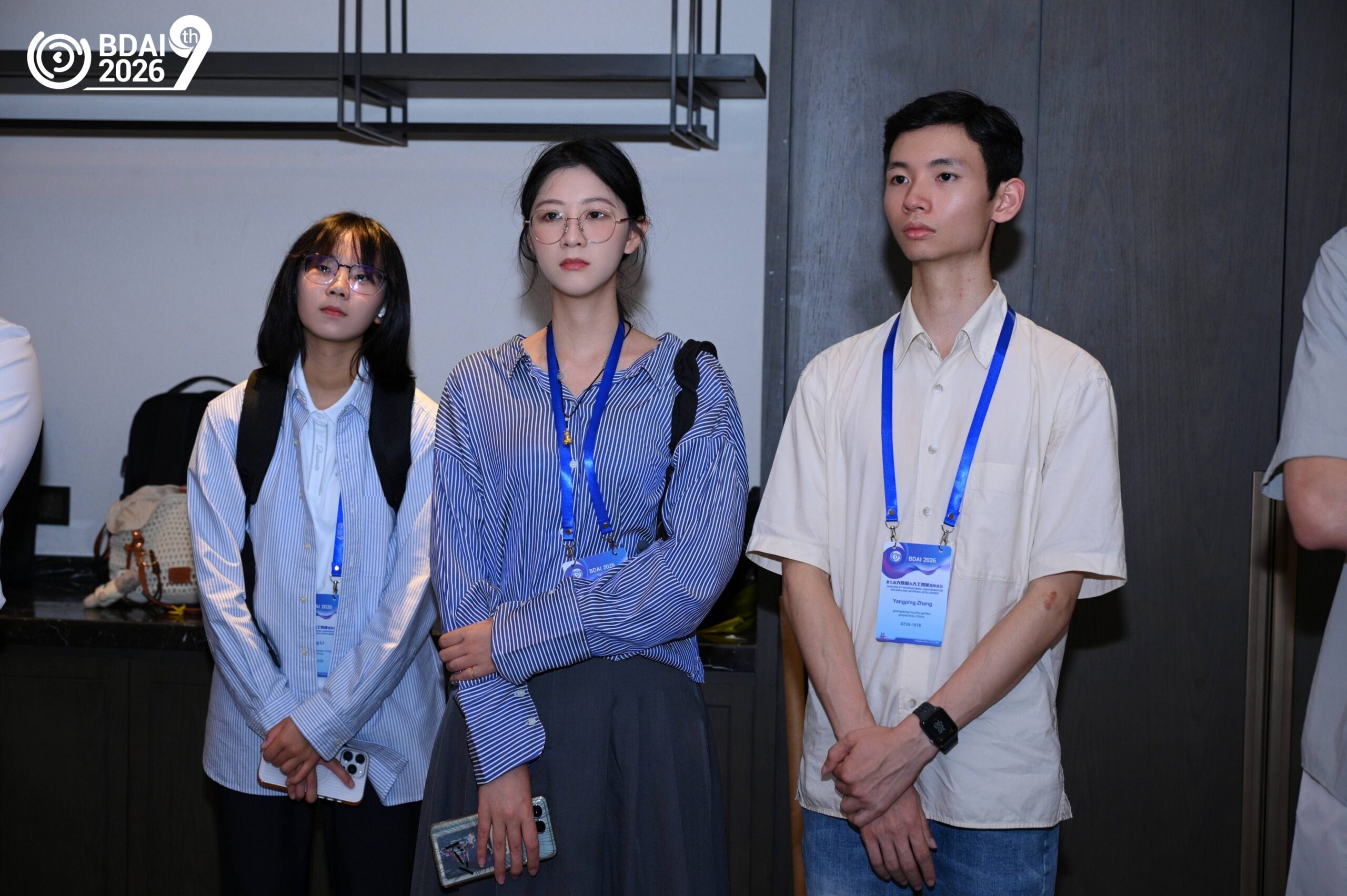
The International Conference on Big Data and Artificial Intelligence is an academic event initiated by Professor Guan Shengwei of Xi’an Jiaotong Liverpool University and jointly organised by a number of renowned universities and research institutes both domestically and internationally. Since its inaugural session in Beijing in 2018, the conference has successfully completed eight editions. It has consistently adhered to the principle of focusing on original basic and applied research in the fields of big data and artificial intelligence, attracting enthusiastic participation from experts and scholars across dozens of countries and regions, including China, the United Kingdom, Finland, Russia, Thailand, Singapore, Turkey, Luxembourg, Germany, Malaysia, Japan, and Denmark. The conference has continuously promoted academic exchange and the dissemination of research outcomes.
This year’s edition was co sponsored by the IEEE China Council and IEEE, bringing together over a hundred experts and scholars from universities, research institutions, and enterprises worldwide. In depth discussions were held on the latest advances in big data and AI, covering model methodologies, system architectures, and industry applications.
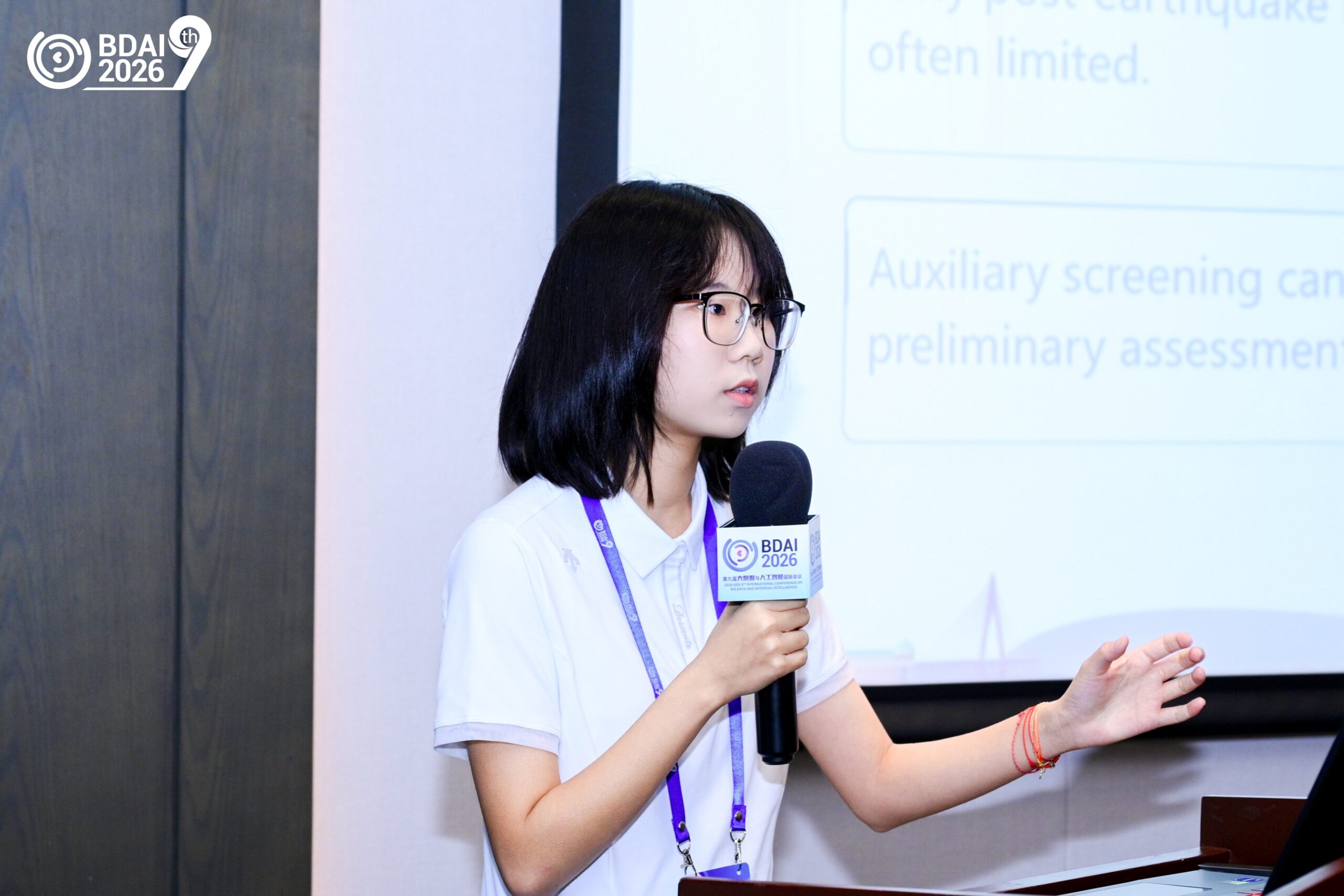
The paper focuses on the rapid identification and intelligent assessment of tsunami risks triggered by earthquakes. Addressing the practical constraints of incomplete information and limited response windows following a disaster, the study utilises publicly available earthquake event data and integrates multiple features such as magnitude, focal depth, geographic location, and seismic intensity to construct a lightweight machine‑learning risk‑scoring model. Through multi‑algorithm comparison and performance evaluation, the research explores technical pathways for efficient initial screening and interpretable prediction under low‑computational‑power and time‑sensitive conditions. This project not only provides a data‑driven decision‑support framework for post‑earthquake tsunami early warning but also demonstrates the potential of AI technology in serving public safety and natural disaster governance.
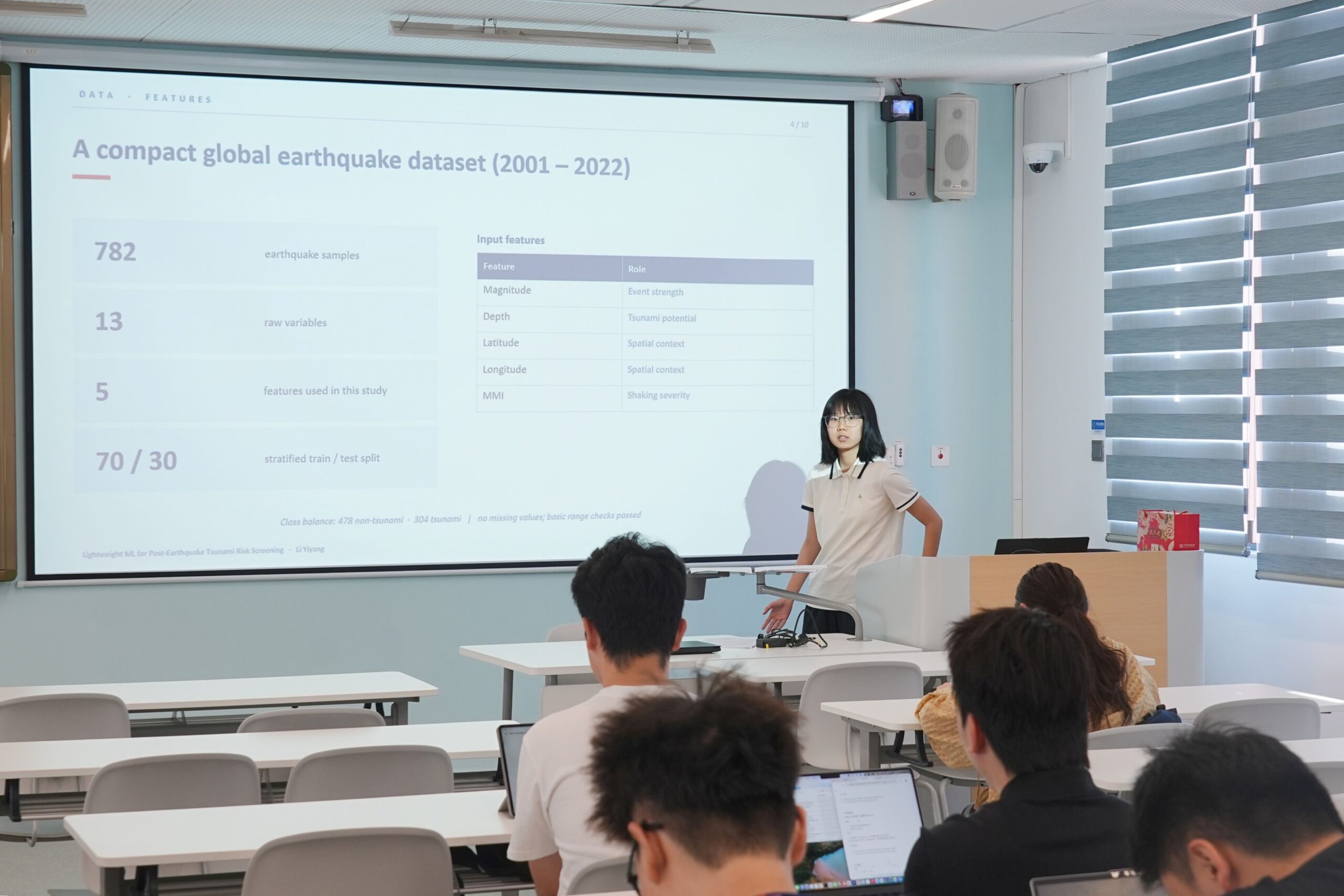
Li Yiyang said:” As a first year undergraduate student, I felt deeply honoured and truly cherished the opportunity to stand on the platform of an international academic conference and engage in scholarly exchange with researchers from universities, institutes, and leading enterprises. From the initial selection of the topic “rapid post earthquake tsunami risk assessment” to the completion of data cleaning, feature modelling, algorithm comparison, paper writing, and final publication, the eight month journey gave me a complete research training experience and, at the very beginning of my university life, allowed me to grasp the profound connection between academic inquiry and real world needs.”
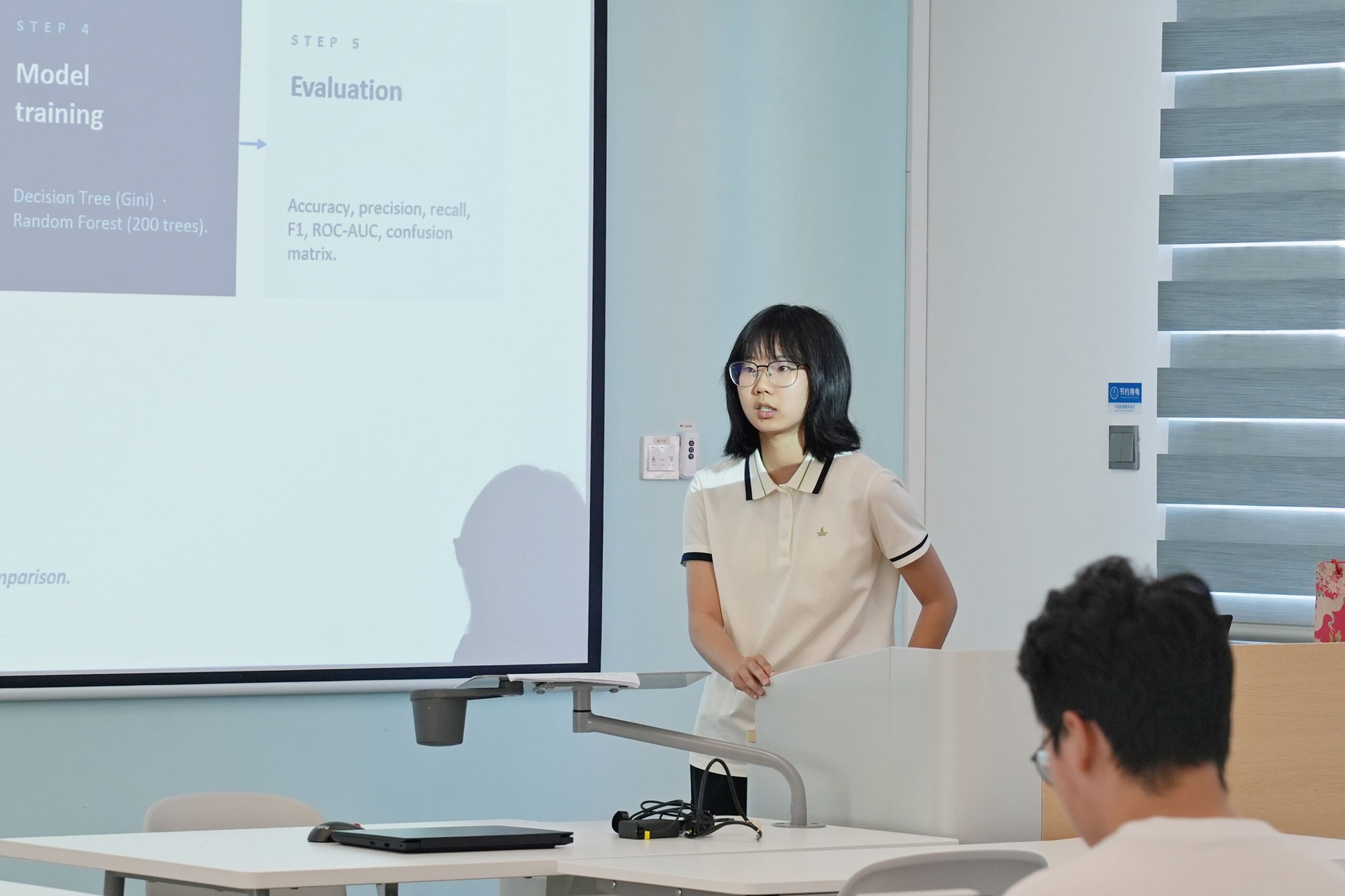
“During the conference exchanges, I came to a profound realisation: truly valuable technological innovation does not merely chase model complexity or performance metrics, but rather seeks more robust, more efficient, and more deployable solutions under real world constraints. The cutting edge presentations by numerous scholars on AI, data science, and engineering applications also opened my eyes to the vast possibilities of technology serving public safety, social governance, and human well being.
This conference experience added a remarkable chapter to my first year at university. It was not only a presentation of a milestone achievement, but also the starting point of a new journey. In the future, I will continue to let problems guide my inquiry and practice shape my path, honing my research capabilities through project experience, broadening my academic horizons through frontier exploration, and striving to grow my young ideas into innovations of genuine value.”