

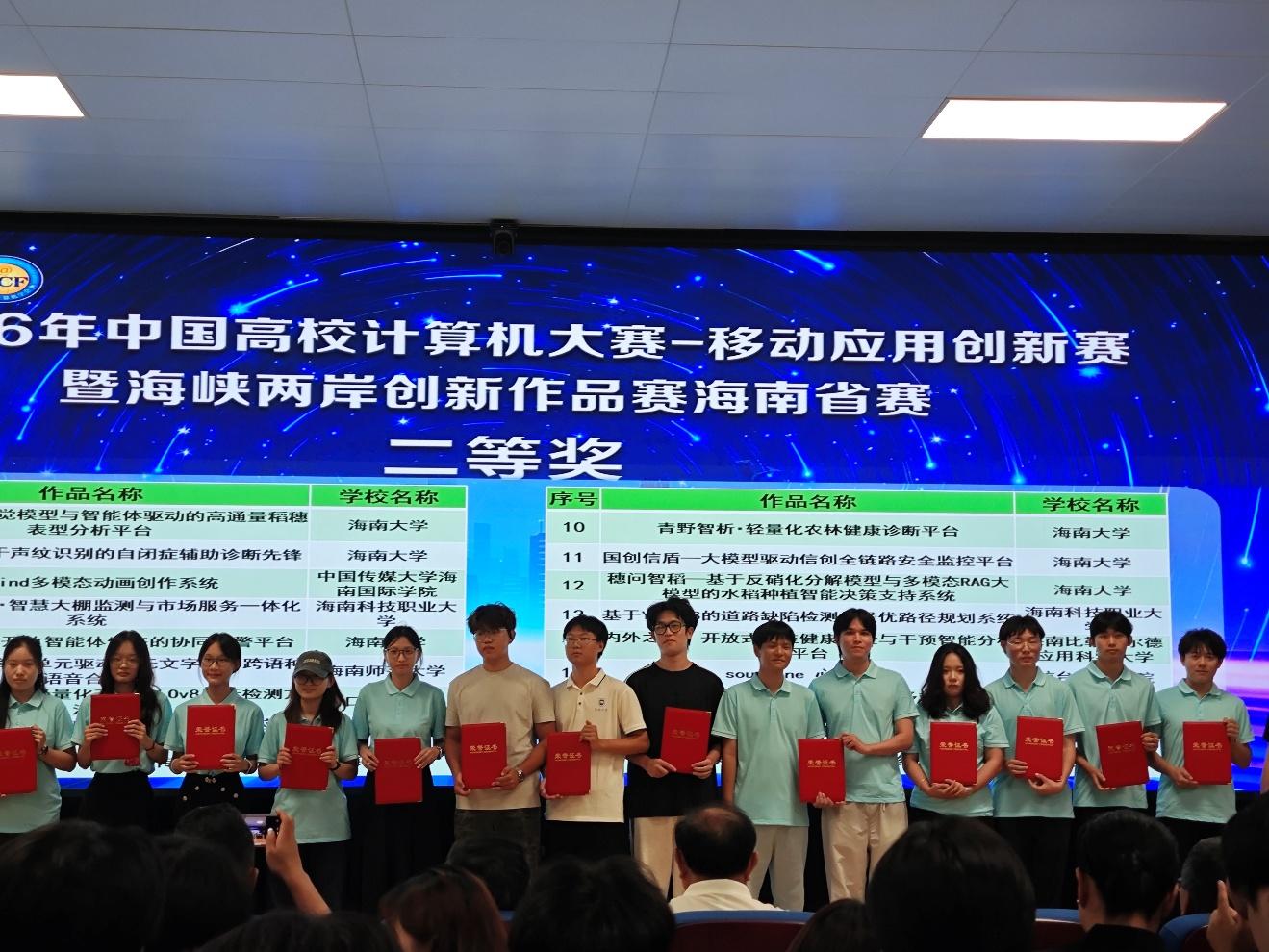
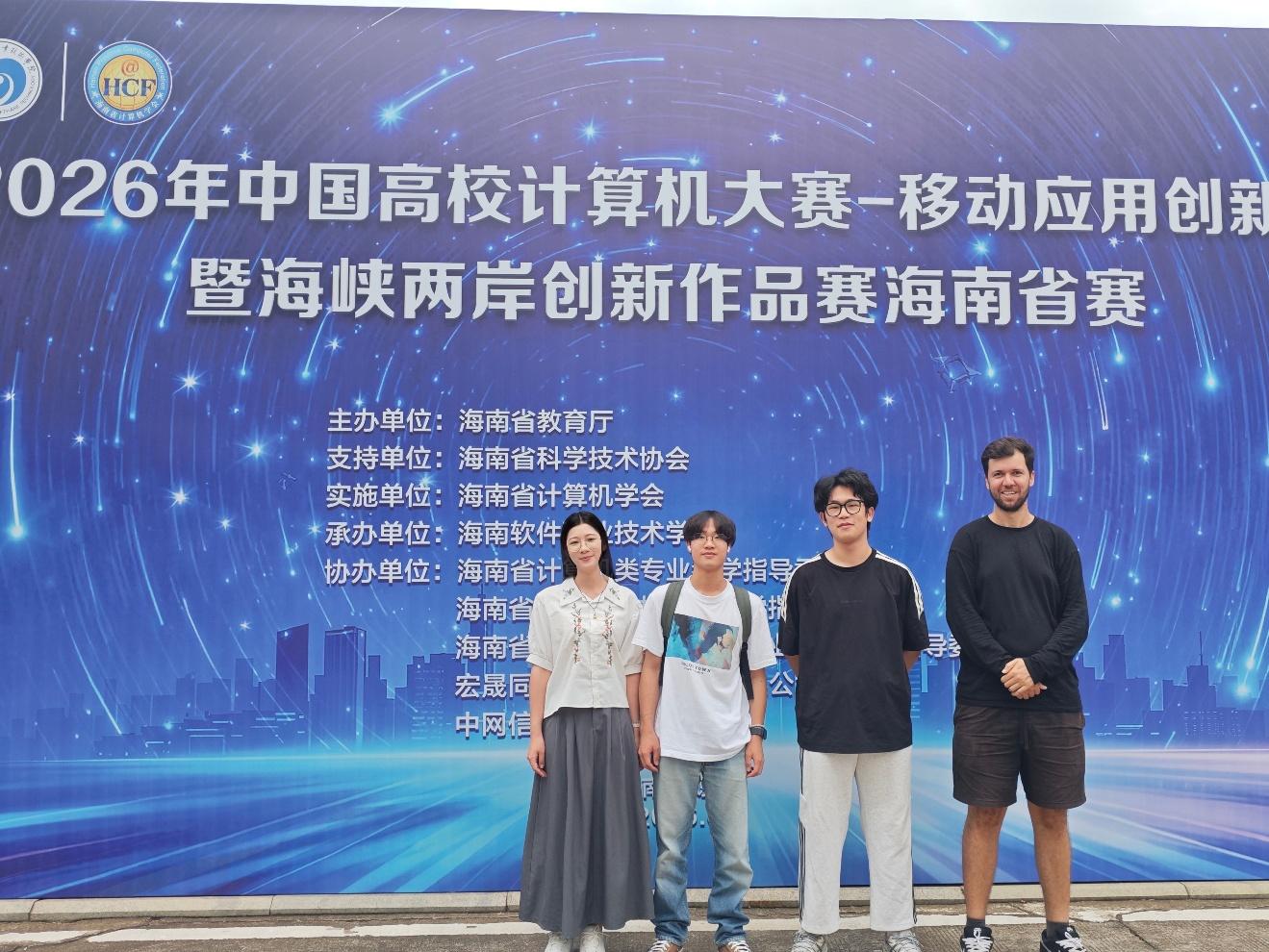
Recently, at the 2026 China Collegiate Computing Competition – Group Programming Ladder Tournament and Mobile Application Innovation Competition – Hainan Competition, Dong Haoxiang and Li Zetao, two students from BiUH’s Class of 2025 majoring in Digital Technologies, won the second prize under the supervision of Ms. Ruan Yujie. The two contestants refined their project meticulously in terms of project integrity, technical implementation, innovation and practical value.
The following section shares their competition preparation journey, insights and experience.

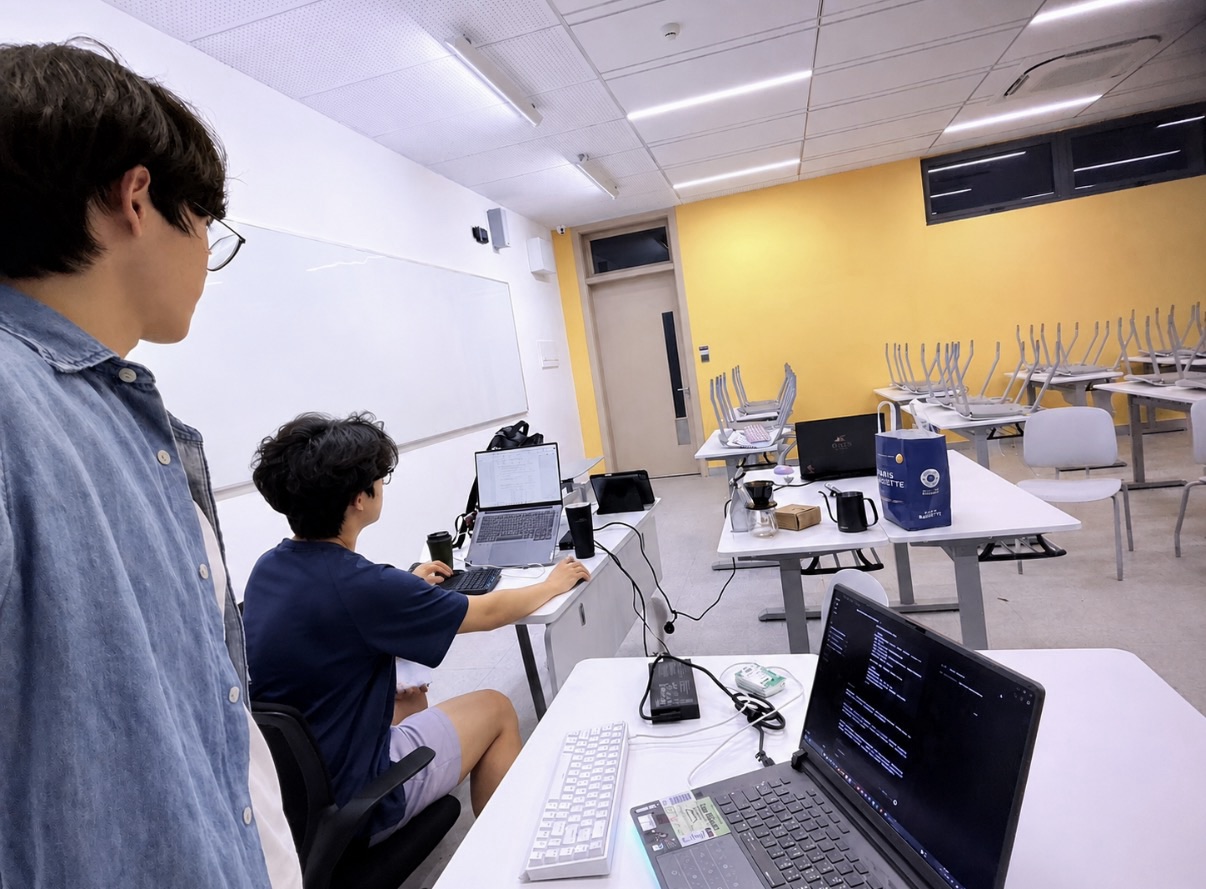
During preparation, we did not treat the project as merely a coding task. We began with the problem and intended users, clarified the design purpose, technical route, and application scenario, and then iterated on core functions, interaction quality, system stability, and presentation flow. Each revision required testing, troubleshooting, and team discussion. Through this process, we learned that a competitive innovation project must do more than run successfully: it must also explain what problem it solves, why its technical approach is appropriate, and what practical value it can create.
In line with the competition requirements, we refined the project introduction, design documentation, and demonstration materials. We clarified team responsibilities, summarized the innovative and practical features of the work, identified areas for improvement, and conducted repeated mock presentations and question-and-answer sessions. These rehearsals helped us communicate complex technical ideas more clearly and develop a more dependable way of working together.
At the competition, we presented the project and demonstrated its functions within a limited time, while responding to questions about our technical choices, innovation, application prospects, and future improvements. Under pressure, we stayed composed, supported one another, and focused on communicating the core value of the work. Receiving the Second Prize was both a recognition of our preparation and teamwork and a memorable opportunity to rethink the relationship between learning, innovation, and practice.
This experience showed me that a computing competition evaluates much more than technical knowledge or coding speed. It tests the ability to identify a meaningful problem, break it down, validate a solution, and improve it continuously. Technology becomes valuable only when it is connected to a clear need and a realistic use case.
Strong fundamentals remain the starting point of innovation. Data structures, algorithms, programming, software engineering, and debugging may appear to be ordinary parts of daily study, but they determine whether a team can locate problems quickly, compare possible solutions, and optimize a system when difficulties arise. Understanding the principles behind a method is far more useful than memorizing an isolated answer.
I also learned that steady accumulation and thoughtful review matter more than a short burst of preparation. Moving a feature from ‘working’ to stable, usable, and presentable usually requires many rounds of testing and refinement. Every failure, awkward demonstration, or unclear explanation reveals a weakness. Experience becomes ability only when those issues are recorded, analyzed, and corrected.
Teamwork was another major lesson. Clear responsibilities improve efficiency, timely communication prevents duplicated effort, and mutual support keeps the team steady under pressure. The competition also taught me that communication is part of technical competence. Helping judges and audiences understand a project’s value requires clear reasoning, careful organization, and confident delivery.
The Second Prize gave real meaning to the idea of learning and innovating through competition. The event connected classroom knowledge with needs analysis, product design, engineering implementation, and public presentation. It allowed me to see our progress while also recognizing that there is still room to improve the project’s technical depth, user experience, and readiness for real-world use.
I plan to continue improving our entry by focusing on user needs, functional reliability, interaction quality, and practical application value. I also hope to strengthen engineering details such as testing standards, technical documentation, performance, and data security, so that the work can gradually develop from a competition project into an application that can be used and maintained over time.
For my own development, I will continue building a stronger foundation in algorithms, software engineering, and mobile application development. I will explore new tools and real projects, and improve my ability to solve complex problems through long-term practice and structured reflection. The collaboration and presentation skills developed during this competition will also support my future coursework, research, and innovation projects.
Experience Sharing
- ■ Build strong fundamentals. Do not begin by chasing complexity. A solid command of programming, data structures, algorithms, and software engineering will make design and debugging much more manageable.
- ■ Invest in long-term progress. Technical ability develops through consistent practice. Make a realistic learning plan and treat every implementation, test, and revision as part of that growth.
- ■ Review your work deliberately. Finishing a project is only the first step. Ask why a problem occurred, why a solution worked, and whether the result could be simpler, more stable, or easier to use.
- ■ Learn to collaborate. Agree on responsibilities and interfaces early, and communicate progress and risks openly. A strong team succeeds by connecting individual strengths to a shared goal.
- ■ Practice presenting and defending your work. Learn to explain the need, solution, innovation, and practical value within a limited time, and rehearse answers to likely questions. Clear communication helps technical work receive fair understanding.
- ■ Take part and stay curious. Do not avoid a competition because you are worried about the result. Awards are meaningful, but the more lasting gains are discovering weaknesses, building confidence, and maintaining the desire to explore new knowledge and new problems.
Congratulations again to the winners. We hope more students will join future competitions, develop their skills through hands-on innovation, and grow together as a team.